I’m in the final stretch of writing A Green New Deal for Archives, an upcoming publication in the Council on Library and Information Resources Pocket Burgundy series. The anticipated publication date is spring 2023.
The purpose of this publication is to articulate two major threats to US archives: climate change and a destabilized workforce. I review the historical precedent for major public support for archival work, and sketch out the beginnings of public policy for archives to ensure their future viability and relevance in our uncertain future. Archives are a public good, and this publication will argue that therefore archives need significant public investment for their continuity and survival.
I’m sharing a preview of Section 1 below. I’ll be joining the DLF Climate Justice group on Tuesday, November 15 at 10:30 EST to discuss my work so far and get some preliminary feedback. I hope you can join! If you need the Zoom link, or if you can’t make it but want to share thoughts anyway, please feel free to contact me.
Last week I taught “Archives and Climate Change” for California Rare Book School. I was very excited to teach the course, and it wildly exceeded all of my expectations for the week. I was profoundly lucky to have an incredible group of thirteen students who came to the course from various professional and personal experiences. The success of the week is very much to their credit, thanks to their enthusiasm for active participation, eagerness to share with each other, and openness to learning from each other. I’ll share in a later post what a transformative experience it was for me, especially at this point in my career, but I want to spend this post reflecting on the actual teaching logistics of the course.
This was my first time teaching anything for more than a couple hours, and I knew it would be additionally challenging given the online format. I am glad that the course was offered online, since I felt this would widen the possible pool of students and allow people to participate who may not be able to take the time or expense to leave home for a week. And of course, given my own concern about the emissions levels of professional development, teaching a course online was an obvious choice.
CalRBS asked me to finish the syllabus a month before the course began, and I was glad to start prepping it much earlier than that, since it helped me organize my thinking around the main subject areas of the course early on. It was super important to me that participants had a solid foundation of the science and policy of climate change. It was equally important that they learn about climate emotions and climate grief: based on my own personal experience, you cannot do climate work for the long haul unless you recognize and care for your own emotions. I front-loaded the course with these two areas (spread across two days), so that by the time we moved into talking about the impact of climate change on cultural heritage generally and archives specifically, everyone had both the foundational science and emotional tools to fully engage with the content.
Developing the syllabus was helpful for organizing the basic thematic structure of the class, but I still had to figure out how to organize each particular day. Given that folks have spent 2.5 years on Zoom, and given that I had 20 contact hours for the course, I did not want a course that felt like it dragged. There were a few topics I knew I wanted to cover that would be primarily lecture-based. However, I know that I personally do not learn best from lectures, and neither do many others. I reached out to some of my instructional librarian colleagues at UC for advice, and spent a lot of time reading about classroom assessment techniques and active learning. I also drew on activities I’ve used in various social justice settings, especially those focused on facilitating discussions and building relationships within small groups. Several years ago I attended a climate grief workshop at a Quaker conference that was based on the work of Joanna Macy, and her co-authored book Active Hope was an enormously helpful resource for the week.
Some things I did in the service of setting expectations up front:
I deliberately chose not to record class sessions (except for one super technical afternoon of demonstrating ArcGIS online). I posted PowerPoint decks and course materials (Google Jamboards, Zoom chat logs) at the end of each day in our course folder. I strongly believe recording things by default without a strong pedagogical reason for doing so is a form of surveillance, and that unrecorded spaces allow people to share more freely and with greater candor (especially important given the course’s emphasis on group discussions and sharing).
To that end, I also created a pretty stringent privacy policy for the course, which you can read about in the syllabus.
I asked people to generally turn their cameras on for any group discussions. I assumed that if a camera was turned off, someone had stepped away or needed some offline time to gather themselves.
I held office hours before/after each day, and regularly invited all students to attend for any concerns they had.
I left the Zoom room open during the 90-minute lunch period for anyone who wanted to chat with each other. I usually took this time to make some adjustments to the afternoon portion of the course. Most of these lunch periods were fairly quiet, but towards the end of the week some people would come back from lunch a few minutes early to chat with each other.
What I lack in pedagogical training, I (hope) I make up for in abundant enthusiasm and doing my best to read the room so I can tweak things on the fly based on what it seems like people are resonating with. As a result, I built in a lot of activities and group discussions to keep the energy levels going, and allow the students to bond with and learn from each other. Sometimes this took the form of sending students off into “pair and share” discussions, other times it was in small group (3-4 people) breakout rooms. One of the interesting things about CalRBS is that students apply for the course(s) they want to take with their CV and an application statement. The instructors make the admissions decisions, so I knew there would be students coming in with a wide variety of knowledge and experience I simply don’t have. It was important to me to make an environment rich for learning from everyone, rather than an outdated model in which the instructor is assumed to contain all the knowledge. At a certain point in the week, I thought “I feel more like a facilitator helping the students learn as much from each other as they learn from me, the instructor.” This was a really good feeling!
Maybe my first sign that the course would go well was that I was mildly surprised the first day (which was the most lecture heavy) there was so much chatting going on in the Zoom chat box – to the point where there was a request to download and save the chat to our course’s folder with all the other course materials since there were so many resources/links being shared by students. I happily did so that day (and the rest of the week) after putting it to a vote to make sure everyone was okay with it. When my husband (who facilitates a lot of online groups through his volunteer work) asked about the first day and I mentioned how active the chat was, he said “Oh that’s a very good sign!”
The syllabus is embedded below, but since it doesn’t really convey the depth of what each particular day looked like, this is a very brief sample of some of the activities we did:
Every morning we did a round robin of reactions to the day’s readings. This took about 30-40 minutes, but it was well worth the time. It often signaled to me what might be worth adjusting or cultivating more attention to in the afternoon part of the course. The students often built on what someone else said, or helped draw out new connections.
I really like Ayana Elizabeth Johnson’s Climate Action Venn Diagram exercise. On Day 2, we watched the video on her website. Each student then had 10 minutes to fill out their Venn Diagram. Then I sent pairs of students into their own breakout room where they had 20 minutes to interview each other about their Venn Diagram (I sent out an alert message at 10 minutes reminding them to switch turns).
We used breakout rooms and Google Jamboards pretty regularly throughout the week. On Day 4, we had a “choose your own adventure” breakout room/Jamboard activity. Before lunch, students nominated which topics they wanted to discuss with each other (our focus was on what archival practices could be made more environmentally sustainable). In the afternoon, they selected whichever breakout room they wanted and each room created its own Jamboard. Afterwards, we came back to discuss and review the Jamboards in the group.
On Day 5, I expanded the final portion based on student feedback to be something akin to a show and tell/talent show/barn raising as a way to close out the week. Each student had 8 minutes, and could share their ArcGIS StoryMap, their climate venn diagram, or any other project they had been working on/were contemplating in the future.
Here’s the syllabus. Feel free to contact me with any questions! I hope to teach the course again in the future.
Hello friends! I’m honored to teach a course on Archives and Climate Change this summer via California Rare Book School. I would love to see a wide variety of applicants for the course. California Rare Book School is offering scholarships for course applicants, and the scholarship deadline is May 1.
Here are all the details, as well as a preview of the syllabus! Contact me with any questions, especially if you would like more details about what we’re covering each day.
Dates and Times: Monday August 1-Friday August 5, 2022. Synchronous lectures/class discussions/workshops will take place between 10 AM and 3:30 PM Eastern, with asynchronous readings/activities to be completed before/after each day’s live session.
Scholarships:Scholarship deadline is May 1. Tuition is $1200, and a scholarship award provides a tuition waiver for one CalRBS course. Scholarship information: https://www.calrbs.org/scholarships/
Description: Climate change is one of the greatest contemporary threats to archives. Increasingly severe disasters like hurricanes, floods, storms, and wildfires pose immediate dangers. Longer-term trends such as migration and rising sea levels may necessitate decisions concerning the geographic relocation of archives. Archivists and cultural heritage professionals, regardless of where they are located, should understand the threats related to climate change and how it impacts our work and cultural heritage institutions. Participants in this course will:
Learn about the basic science behind climate change
Explore political governance challenges related to mitigation and adaptation
Develop personalized strategies for addressing climate grief and anxiety
Assess how climate change impacts their local region and institutions
Explore how climate change impacts archives and cultural heritage institutions, both in the short and long-term
Develop skills in using simple climate change data visualization and mapping tools
Syllabus Preview
Privacy and Sharing Policy
Climate change can be an overwhelming topic to grapple with, and has the capacity to surface a variety of intense emotions. In order to cultivate a safe community during our week together, participants will be expected to uphold the privacy rights of all participants within the course.
Do not share any written or spoken material by any classmates.
Do not post any screen captures of asynchronous or synchronous portions of this course.
If you choose to share publicly about the course experience (for example, on social media, a blog, or another public forum), keep the focus on your own personal experience and what you learned, rather than discussing the contributions and backgrounds of other participants. The libraries/archives/cultural heritage sector is a small world, and even attempts to anonymize discussion of class participation may compromise privacy.
This is okay: “During the course, I learned how to assess sea-level rise. Using the visualization tool, I realized how many archives on the Gulf Coast, where I lived until I went to college, are in danger.”
This is not okay: “A student from Oregon shared that her public library employer lost a collection of community scrapbooks following a wildfire a couple years ago.”
Week Overview
Day
Subject
Note
Monday, 8/1
Climate Change 101
Tuesday, 8/2
Climate Emotions
Wednesday, 8/3
Climate Visualization/Mapping
Guest lecture: Itza Carbajal
Thursday, 8/4
Short-Term Challenges
Friday, 8/5
Long-Term Challenges
Course Expectations
Each day has a set of pre-readings/resources (which are sometimes websites to explore or videos to watch), and preparations. You should ensure all pre-readings and preparations are completed prior to the first meeting of that day (e.g., ensure you have completed Day 3’s pre-readings and preparations no later than Wednesday morning). I highly recommend spending your late afternoon or evening preparing for the next day so you are not scrambling at the last minute to complete any activities.
Pre-Course Requirement
Prior to the first day of the course, you will write a very brief (1-3 paragraphs) environmental and cultural history of wherever you call home to share with everyone as part of the first day introductions. The definition of “home” is up to you – it may be your current place of residence, a place you used to live in but no longer do, a place with which you have ancestral ties, or any other construction that is meaningful to you.
Wherever it is, your home should be a place you can spatially locate on a map of the Earth – it doesn’t need a street address, but it needs some kind of center point (i.e., latitude and longitude). You will be strongly encouraged to make your home’s location the basis of some of our mapping projects later in the week.
A fundamental part of re-orienting ourselves as stewards of the planet is to unlearn harmful ideas of people vs. nature. Many of us operate without much understanding of the environmental history and characteristics of where we live, making climate change seem like a faraway or abstract problem, instead of something already impacting wherever it is that we call home.
Consider trying to answer some of the following questions in your introduction:
I read fewer books, listened to fewer podcasts, and watched fewer movies than I wanted to in 2021. I doomscroll too much and when I’m not doomscrolling I play entirely too much Two Dots.
Oh well. I’m still here and so is almost everyone I adore. Which is all that matters. I’m taking a break from goals for 2022 – my only aim is to cultivate humility. Truly.
Here’s what stood out in 2021 (past years: 2020, 2019, 2018).
Comforting Stuff
I knew 2021 was going to be tough for a lot of reasons. These helped me get through some rough patches.
Wintering (book, Katherine May) – A book of seasonal meditations on winter and its parallels to the wintry periods of our life. If you are feeling a general ambiance of chilly sadness, pick this up.
The Lion, the Witch and the Wardrobe (book, C.S. Lewis) – One of my childhood favorites that I came back to re-read for the first time in ages. I’m glad I re-read it, and I’m even more glad it still moves me as much as it did when I was a kid.
The Inner Life of Cats (book, Thomas McNamee) – My cat Clem died early in 2021 and the grief I carried leading up to his death was unlike anything I had ever experienced. This sweet book about cats (with many stories about the author’s own cat) was very therapeutic.
Memoirs
The Diary of a Bookseller (book, Shaun Bythell) – The ups and downs (and weirdos) of running a secondhand bookstore in Scotland. It also made me realize how much I love diary format books, which led to this question on Ask MetaFilter.
The Barbizon: the Hotel That Set Women Free (book, Paulina Bren) – Can you have a memoir of a building? Because that’s kinda what this was. The Barbizon Hotel was a hotel where lots of young professional women stayed in New York back before it was normal for young women to travel freely and stay wherever they want. I found out while having dinner with my in-laws that one of their friends (at the dinner!) had stayed at the Barbizon.
A New Kind of Country (book, Dorothy Gilman) – One of the AskMe book recommendations I got for “diary-style” books. I wasn’t familiar with Gilman’s other work, but basically it’s her memoir of retiring to the coast of Nova Scotia. I loved the description of windy nights!
An Onion in My Pocket (book, Deborah Madison) – Most people know Deborah Madison from her vegetarian cookbooks. I’ve never really cooked from Deborah Madison’s cookbooks, even though I have stuck to a mostly vegetarian diet for most of my life. But after reading her memoir of going from cooking for a Zen monastery to opening a restaurant, I feel like I’m a bit more familiar with her legacy.
When Women Were Birds (book, Terry Tempest Williams) – Whenever I need deep catharsis by way of crying in a fetal position, I reach for Terry Tempest Williams. I think it helps if you’ve already read Refuge since there are a lot of references to the women in her family (thanks to my friend Sam for sending me Refuge many years ago).
Climate Change
Disposable City: Miami’s Future on the Shores of Climate Catastrophe (book, Mario Alejandro Ariza) – I don’t know why this book hasn’t gotten more press. The only reason I found it is because we spent a ton of time in Miami on a trip to visit my in-laws in south Florida, and all I could think of the vast enormous new construction everywhere was “how much of this is going to be under water in 20 years?” So I started looking for books on Miami and climate change and found this. It’s totally engrossing, thanks in large part to Ariza’s perspective as a millennial first-generation Floridian. It made me understand the completely surreal world of south Florida’s culture, urban planning, and real estate much better.
“Living at the End of Our World” (podcast episode, Know Your Enemy) – I’ve talked about Know Your Enemy before, which is easily one of the best leftist podcasts around. This was a very different episode than what they normally tackle, but I loved it because the hosts and their guests talked out loud about things related to climate change, that I often only process privately (stuff like – grappling with how to communicate to children what’s coming, what we’d trade about what’s better now in order to have a livable future, what older people whose existential crisis centered on the Cold War nuclear arms race don’t understand about climate change, leftist aversion to deep emotion as an organizing strategy, etc).
How we spend our days
Laziness Does Not Exist (book, Devon Price) – My friend Ruth recommended this, and it was hands down the best book I read in 2021. I want you to read it as well. If you need a book to help you understand and talk back to some of your deeply seated internalized capitalism, this is the one. I came away with a lot more compassion for myself and some concrete ways of understanding the ways in which all of late stage capitalism depends on gaslighting everyone into buying into the myth of laziness. I rarely re-read books, but I loved this so much I’m thinking about reading it again pretty soon.
The Wisdom of Stability (book, Jonathan Wilson-Hartgrove) – I picked this book up a few years ago during a Quaker conference, and packed it with me to read at Pendle Hill (a Quaker retreat center). The author is a pastor who writes (from a very faith-based perspective) about what it means to stay put, even though our culture valorizes hypermobility.
Daily Rituals: How Artists Work (book, Mason Currey) – I mostly read non-fiction, and love books with very short essays (mostly because I go through long stretches where the only reading I manage to do is five minutes before bed before conking out). Currey’s book profiles various writers and artists and composers. There’s a lot of “Famous White Guy would have his wife prepare him lunch every day, he’d go for a walk and then come back and work for two hours before having friends over for cocktails” but if you can get past those, there are a lot of gems in this book (and Currey put out a sequel featuring all women, which is great!). The thing I remember most from this book was about Marina Abramović’s ritual while she was performing The Artist is Present – that she peed four times before she began each sitting. Perhaps the most relatable thing I’ve read in a long, long time.
CHANI (app, Chani Nicholas + collaborators) – Close friends know that I’m very into astrology. This app is like an extension of Chani Nicholas’s book You Were Born For This. Normally I am not a “yearly subscription to an app” kinda person, but I make an exception for CHANI. I find Chani Nicholas’s voice for the weekly readings to be so soothing I often listen to them multiple times a week on my commute for the calming effect.
As archivists enter our second summer of online conferencing, and the pandemic has gone from “getting under control” with the vaccine rollout to “?????? who knows???” with the variants, people are naturally wondering what conferencing in the future will look like if, and when, it is safe to travel again. We should not go back to the pre-pandemic conference model. We should retain the best of both online and in-person conferencing, and not squander the incredible opportunity we have to rethink how we conference.
One of the blessings and the curses of the archives profession is how incredibly decentralized it is. Many, if not most, archivists belong to multiple location and specialty-based associations. For example, an archivist could belong to a local (Greater New Orleans Archivists), state (Society of California Archivists), regional (Midwest Archives Conference), national (Society of American Archivists), and/or specialist organization (Association of Moving Image Archivists). As a result, it is not unusual for archivists – particularly those with financial privilege or institutional support – to maintain memberships in multiple archival associations. But all of these organizations are independent of one another – which also means all of their annual meetings are coordinated independently of one another.
This is not sustainable, on multiple levels. It’s certainly not sustainable on a carbon emissions level, and given the limited travel budgets of most archivists (many in our profession have to pay entirely on their own dime), archivists have always had to choose which conferences to attend and which to skip (I have no evidence to support this, but I wouldn’t be surprised if attendance at regionals increases in the years that SAA is farthest away from that region). Even for those of us with institutional travel support, it is likely that our travel budgets will take a hit in the future, or certainly will not keep up with costs.
After attending a number of online conferences this year that were traditionally held online, I have been hearing the following comments about the future of conferencing:
“For years I could not attend this conference due to caregiving obligations/disability concerns, and now that it’s online I can finally participate.”
“I like the ease of conferencing from my desk but I also get interrupted by work all the time because I’m still at the office instead of in a conference hotel.”
“I can actually afford to attend as a low-income archivist because I don’t have to pay for a flight and hotel.”
“I enjoy the online sessions but I miss the in-person contact with colleagues from other institutions who are a major part of my professional support network”
All of these concerns are important and valid. We have to take them seriously and not pit them against each other. Presenting the future of conferencing as in-person vs. online is a false choice, because there is a hybrid model we can begin preparing the groundwork for today if we are serious about creating an equitable and sustainable profession.
Learning from the Nearly Carbon Neutral and Distributed Models
Prior to the COVID-19 pandemic, a conference model called the Nearly Carbon Neutral (NCN) approach started circulating in humanities academic subdisciplines. The genesis for the first NCN conference in 2016 arose out of the recognition that academics who take long-haul flights even just a couple times a year for conferences incur significant carbon footprints.
The original Nearly Carbon Neutral approach is very much based on a primarily online model of pre-recorded lectures with interactive Q&A, but subsequent iterations of the NCN model developed a local node distributed system: “sites of collective, face-to-face engagement with the virtual conference.” This was used for the 2018 conference of the Society for Cultural Anthropology (SCA). In their fascinating and comprehensive post-conference reflections post, the SCA organizers noted that their traditional biennial conference typically drew 200 mostly US attendees, but the distributed approach brought in over 1,300 people from 40 countries with 50 local gathering nodes. Due to the international level of participation, the conference organizers had to figure out how to schedule the sessions across time zone differences and create a web presence that could sustain 24/7 access needs.
The SCA organizers ran some back of the envelope math about how much energy was saved from their 2018 experiment:
[A] conservative estimate of the environmental benefit of this experiment is about 425 tons of emissions saved. According to the Environmental Protection Agency, that’s about the same as 100 cars driven for a year. It’s like taking 11,500 cars off the road for the duration of the three-day conference. Go anthropologists!
A proposal for HACS: Hybrid Archives Conference Strategy
Archivists are already highly networked through existing local/state/regional groups, which provides us with fertile ground to experiment with a distributed/hybrid/decentralized conference model. While the local/state/regionals are independent from the Society of American Archivists, there have been efforts in recent years to develop some coordination among these organizations, most notably through the Regional Archival Associations Consortium (RAAC):
The Regional Archival Associations Consortium (RAAC) provides a mechanism to connect the leadership of regional, multistate, state, and local archival organizations with each other and to the Society of American Archivists (SAA). RAAC seeks to facilitate information exchange and foster collaboration among these organizations. It offers formal channels to coordinate efforts intra-state, interstate, and with SAA which facilitate streamlining actions, reducing costs, and increasing services.
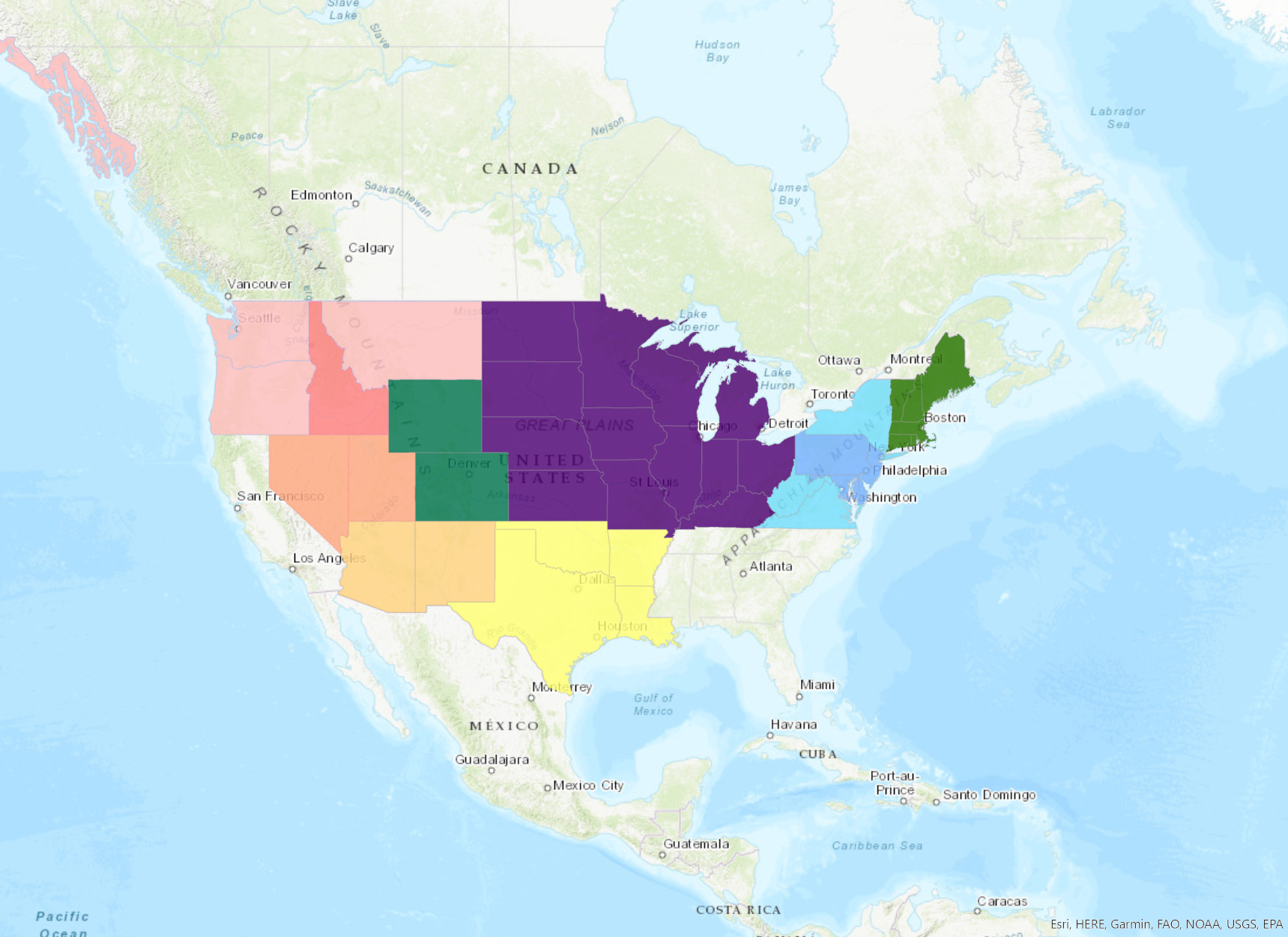
The regionals are a natural way to site nodes for a distributed and decentralized hybrid conference model. Let’s take a look at what the map of our regionals looks like right now. This is a little confusing, because some states are part of more than one regional organization, especially in the Conference of Inter-mountain Archivists and Society of Southwest Archivists (for example, New Mexico and Arizona are both part of SSA and CIMA), as well as the Mid-Atlantic Regional Archives Conference and Delaware Valley Archivists Group regions. But the tl;dr is that if a state in this map is colored in, it is part of one of the following 8 regional organizations:
Conference of Inter-Mountain Archivists
Midwest Archives Conference
New England Archivists
Society of Southwest Archivists
Mid-Atlantic Regional Archives Conference
Northwest Archivists
Society of Rocky Mountain Archivists
Delaware Valley Archivists Group
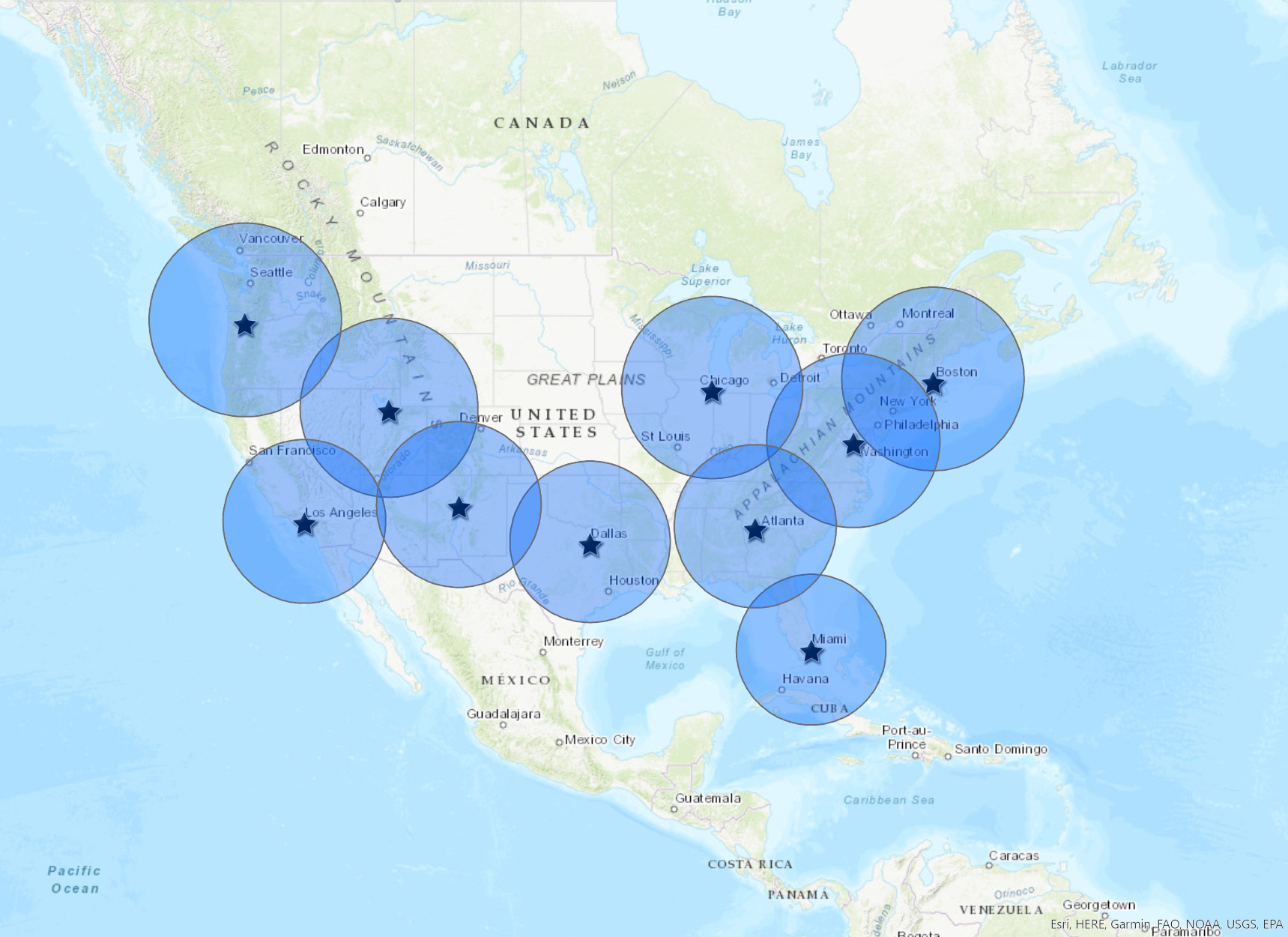
For our pilot conference model, let’s pick 10 node cities:
Miami
Boston
Washington DC
Chicago
Dallas
Salt Lake City
Los Angeles
Portland
Atlanta
Albuquerque
…if you draw a buffer of 350 miles out from every city, you can see how much of the country is covered.
If you want to noodle around with these maps, you can access a public version to play around with them. Note that not all of these nodes are within an existing regional organization, but every state that is not in a regional has its own state-level association. So for example, Miami, Atlanta, and Los Angeles would be respectively covered by the Society of Florida Archivists, Society of Georgia Archivists, and Society of California Archivists (again, for the non-archivists out there, even though all of these names sound suspiciously similar to “Society of American Archivists” they are all independent autonomous groups with no official subordinate relationship to the SAA).
Any good pilot project deserves an acronym, so how about HACS: the Hybrid Archives Conference Strategy. It already sounds a lot like another acronym we’re already familiar with. There are infinite iterations you could come up with for a hybrid schedule, and the following is just one example. In our example, SAA and the regionals essentially combine forces into a 3-day hybrid conference.
My extremely half-baked ideas on some guiding principles:
Ideally, all nodes are roughly equivalent in terms of anticipated audience, registration costs, and programming offerings, though one may need to serve as the “command center” for technology purposes and hosting things where SAA staff may need to be on-site (e.g. Council meetings and the annual business meeting). This may need to be Chicago given that its where the SAA offices are headquartered. Care should be taken so that the command center doesn’t simply default to being the conference location everyone wants to go to and defeating the point of a distributed model.
Nodes should be located in cities that support multi-modal transportation, including rail.
All nodes should offer on-site childcare. For more about the importance of childcare provision at archives conferences, please see “The Cost of Care and the Impact on the Archives Profession” by Braun Marks, Dreyer, Johnson and Sweetser.
Roughly half of the overall programming would be overseen by SAA (“national”) and half would be overseen by the state/regional organizations (“local”). A roughly equal mix of nationally-selected and locally-selected programming would be offered at each node.
Presentation proposals could be sent to either the national or a local program committee for consideration. Topics of a broad national interest should be sent to the national program committee, while institutional case studies or highly localized topics should be sent to a local program committee.
One challenge may be that a panel accepted by the national committee is more likely to have presenters from disparate regions. In this case, they may be encouraged to deliver their panel from the node closest to the majority of panelists or in special circumstances the panel itself may require hybrid delivery (half of the panelists in one location and half in another) orit may be a panel that is simply pre-recorded if the logistical concerns about getting everyone together are difficult to resolve.
Any content from official nodes should default to streaming & recording online with interactive Q&A at the end to accommodate remote viewers unless there are good reasons to keep it offline (for example, confidentiality concerns, workshops with significant hands-on work meant for small in-person groups, etc)
All conference registration will happen via nodes. Conference registration fees should be roughly similar at all nodes to incentivize minimal travel. In other words, you don’t want LA to be $400 and Albuquerque to be $50, because then more people might go to Albuquerque, thus defeating the point of a distributed model. This may require use of alternative non-hotel venues in some cities.
All nodes would have at least some rooms dedicated to streaming in panels from other nodes.
Anyone can register as a fully-remote viewer that enables access to all recorded sessions. Access to all recorded sessions will be automatically included in anyone who plans to attend via a node.
People may set up unofficial nodes outside of the official nodes for the purposes of increasing viewership and accessibility by using their remote viewer registration (notice in the second map that there are major parts of the Plains states that are not well-served by the hypothetical set of nodes). However if the unofficial node hosts more than a couple viewers, they will be strongly encouraged to make an additional donation to the closest node to them to support the technology investment required for content delivery.
Day 1
Day 2
Day 3
Early AM: Local workshops and local governance meetings (for example, MAC’s business meeting)
Early AM: Conference sessions (50% selected by local program committees, 50% by national program committee)
Early AM: Conference sessions (100% selected by national program committee)
Late AM: Local workshops and local governance meetings (for example, MAC’s business meeting)
Late AM: SAA Plenary
Late AM: SAA committee and section meetings
Early PM: Conference sessions (100% selected by local program committees)
Early PM: SAA committee and section meetings
Early PM: SAA annual business meeting
Late PM: Conference sessions (100% selected by local program committees)
Late PM: Conference sessions (50% selected by local program committees, 50% by national program committee
Late PM: Conference sessions (100% selected by national program committee)
Some Concluding Thoughts
I know that inevitably some people will consider this and immediately ask “OK sounds cool but what about….?” I’m sure there are plenty of contingencies I haven’t considered. But I hope that all the reasons I’ve laid out for why we should try this are compelling enough to give it a try.
One very obvious challenge of putting together something like this is that there is less time for stuff, and inevitably a lot of things will get cut that normally wouldn’t happen in the status quo environment of more conference time (4ish days for SAA, 2-3 days for regionals). And honestly, after serving on numerous governance and programming committees, this should be thought of as a good thing. Not only do I think that our conferencing model is unsustainable, I also think the vast array of committees and sections and working groups that exist across our national and regional organizations are unsustainable.
We archivists are very good at starting things, but we are very bad at letting things go. We can try to keep all of our conferences and organizations going at the same pace while finding fewer and fewer people each year who are willing to volunteer for new governance and conference planning roles. Worst case scenario, the institutions we work at will make that decision for us as our travel budgets are cut and our profession shrinks by attrition. Or we can avoid both of these less than ideal scenarios by preparing new ground to transform into something better than what we’ve always known. It is time to say goodbye to our old conferencing model, and begin preparing the ground for a much healthier, networked, and accessible conference culture.
Many thanks to Jenny Latessa in UC Libraries Research and Data Services for her explanation of how ArcGIS handles color-coding symbology.
Perhaps the only thing that worked out well in the hell year of 2020 was that I met my personal reading goal – no doubt aided by insomnia induced by world events as well as spending more time at home.
Keeping up with the past practice (2019, 2018) of identifying the various themes in my favorite media picks, here are some of the highlights.
Women’s Memoirs
I read several of these books at the height of my pandemic-induced stress insomnia around 3-4 AM. Margaret Renkl and Sue Hubbell’s books soothed me the most.
Trick mirror (book, Jia Tolentino) – A wonderful book of essays by one of the most talented millennials currently writing for the New Yorker.
Thick (book, Tressie McMillan Cottom) – I hope that one day I can construct a sentence, let alone a paragraph, like Tressie McMillan Cottom. Another moving book of essays.
Late Migrations (book, Margaret Renkl) – I first noticed Margaret Renkl when she wrote an op-ed in the New York Times about possums. Stories about nature and family in the South.
A Country Year: Living the Questions (book, Sue Hubbell) – Sue Hubbell was an academic librarian who moved to the Ozarks with her husband. Their marriage dissolved but she became a beekeeper. I love her description of the seasonal work and descriptions of her working on her barn, her pets, and working with hives.
Deep Creek (book, Pam Houston) – A memoir of Houston’s life, surviving childhood abuse, and living on a ranch. I stayed up late one night reading the chapter in which she fled a wildfire that nearly wiped out the ranch and it was one of the most harrowing things I’ve ever read.
Public Policy
If you constantly wonder why the US can’t have nice things, eventually you need to read some books about public policy.
Cadillac desert: the American West and its disappearing water (book, Marc Reisner) – Read this if you want to develop some really strong feelings about water infrastructure!!
The triumph of injustice : how the rich dodge taxes and how to make them pay (book, Emmanuel Saez; Gabriel Zucman) – Read this if you want to know how we can finally have nice things and feel justified in your hatred for the 1%!!!
Are Prisons Obsolete? (book, Angela Y Davis) – Read this if you want to learn more about prison abolition but need someone to break it down for you!!
Neither snow nor rain: a history of the United States Postal Service (book, Devin Leonard) – Read this if you love sending and receiving mail as much as I do!!! The US Political Service is arguably one of the greatest things the United States has ever created and we must protect it!!!
Portraits of political leaders/movements
Maybe it’s an age thing but I find that the older I get, the more I enjoy reading biographies – sometimes as inspiration, and frequently as cautionary tales or warnings.
The woman behind the New Deal : the life of Frances Perkins, FDR’s Secretary of Labor and his moral conscience (book, Kirstin Downey) – Frances Perkins was one of the few people in FDR’s Cabinet who was there for his entire tenure, and we still benefit from her legacy through things like Social Security and workplace safety protections. Frances Perkins witnessed the Triangle Shirtwaist Factory fire, and it deeply shaped her policy work. She died as a broke adjunct who had been housemates with Paul Wolfowitz (seriously). I was powerfully moved by the opening chapter in which FDR asked her to become the first woman in a President’s Cabinet and the decisions she had to wrestle with to say yes.
Ella Baker and the Black freedom movement: a radical democratic vision (book, Barbara Ransby) – I think the whole concept of bibliotherapy is a little cheesy, but this book was both an intensely soothing restorative balm for my anguish about leftist sectarianism and also an inspirational look at how to organize and build power. If your main lens for understanding the Civil Rights movement is through charismatic leaders like Martin Luther King, you must read this book to expand your understanding of the period. Ella Baker is one of my non-sectarian leftist heroines – intensely practical, process-oriented, and no time for bullshit. I think this book might have the most marginalia of any book in my personal library – I was underlining and writing things like YES or OMG or !!!! in the margins of nearly every other page. After I finished it I sent Barbara Ransby an email thanking her for writing such an immensely transformative book that put my own political experiences into perspective.
Before the Storm (book, Rick Perlstein) – I kept describing Rick Perlstein’s book as a biography about Barry Goldwater but then my smarter friends who’ve also read the book pushed back on that description: in their opinion, it was more of a chronology of a political movement. They’re absolutely right. I had been under the impression that the Southern strategy was more of a Nixon-era thing, but Perlstein’s book really helped me understand how much of the current right-wing ideology has its roots in the Barry Goldwater movement. I’m currently reading Perlstein’s Nixonland which is also good, but Before the Storm is masterful on another level.
With Babies and Banners (documentary) – Many know about the 1936-1937 Flint Sit-Down Strike organized by the UAW at General Motors, but fewer know about the incredible role that women played in it. This is a wonderful documentary that has both extremely 1970s/80s labor historian vibes AND big second-wave feminist oral history vibes (i.e. pretty much genetically engineered to be relevant to my interests).
I gave this (Zoom) talk to my friend Rick Prelinger’s “Archives: Power, Justice, Inclusion” course at UC Santa Cruz in early May. I’ve long been fascinated by the New Deal and this was a good opportunity to put some flesh on an idea I’ve been talking about for a while now.
DUST BOWL AND CRASH OF 1929
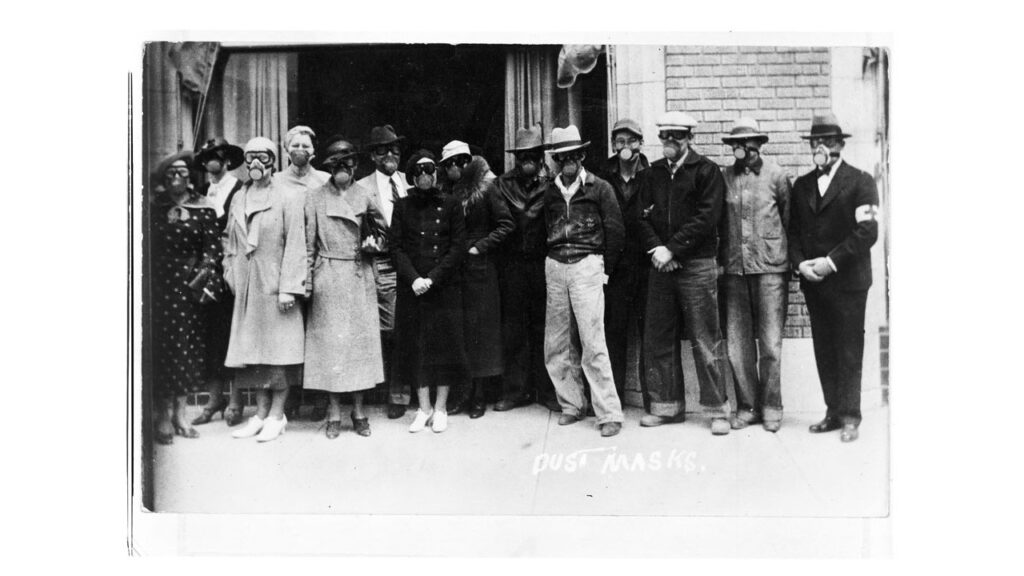
I want to start with this image.
It’s obviously from a long time ago. The clothes look a little older, almost everyone is wearing a hat. One man has an arm band on with a cross on it.
If you had showed me this picture a couple weeks ago, I might have glanced at it and thought it was either the flu pandemic of 1918. Or maybe a wartime photo from WWI or WWII, perhaps a group of medical workers shielding themselves against chemical weapons.
This picture was taken during the Great Depression in the state of Kansas. The year was 1935. The residents of this small town are wearing gas masks to protect their lungs from air pollution, and they are in front of a Red Cross building. At the time this photo was taken, the unemployment rate was around 20%. Just a couple years before the unemployment rate was closer to 25%.
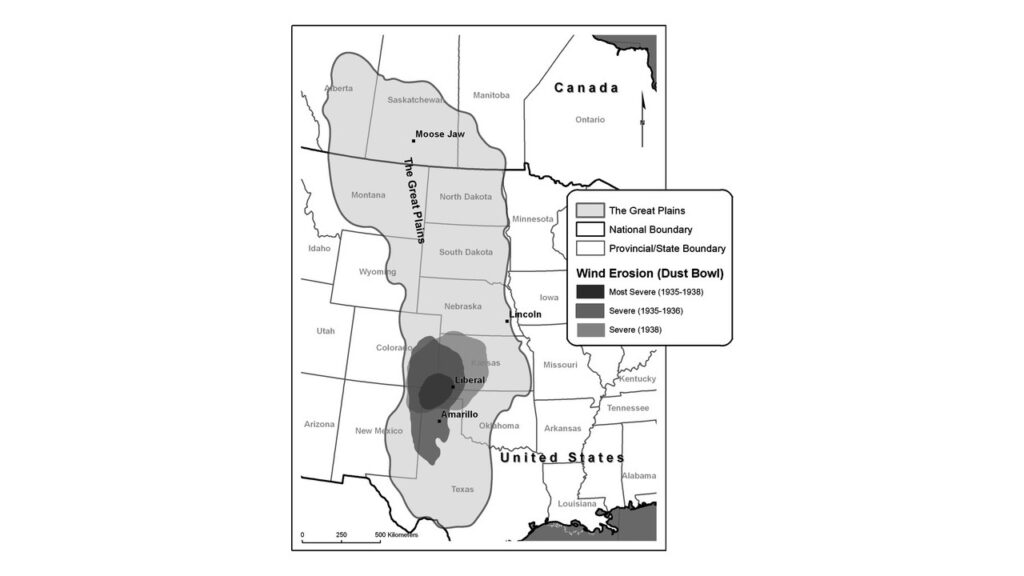
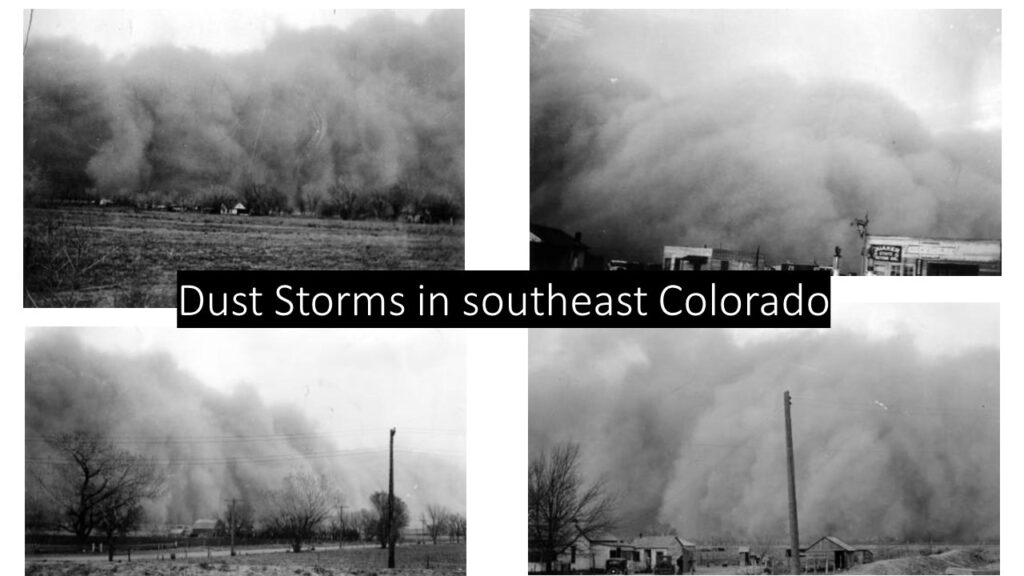
At that time, Kansas was in the middle of what was called the Dust Bowl, which was the site of one of the worst environmental catastrophes in US history.
The Great Depression was a worldwide economic depression that started in 1929 and lasted through the 1930s. The Great Depression started when the stock market crashed in October 1929. As prices began to decline for the value of goods across the country, the price drops eventually affected the wheat crops grown in the Great Plains states. As the value of wheat dropped, farmers plowed up more acres to put into production to make up for the lost profits. Initially there was a huge harvest of wheat, but the over supply of wheat led to an even greater drop in wheat prices.
In order to grow the wheat in the first place, farmers removed the prairie short grasses that had helped hold the soil in place. Many areas of this region also experienced drought. These forces combined to create massive dust storms that look like something out of a horror movie. One of the dust storms were so big they went far east and even reached Washington DC and New York. The devastation of the region made thousands of families homeless, and they migrated out of the region, including to places like California’s Central Valley.
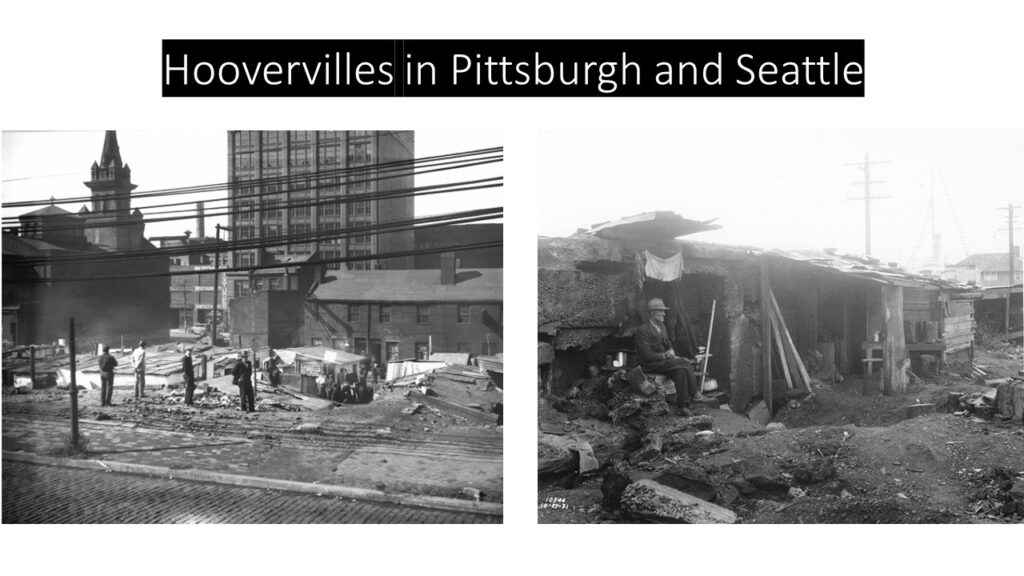
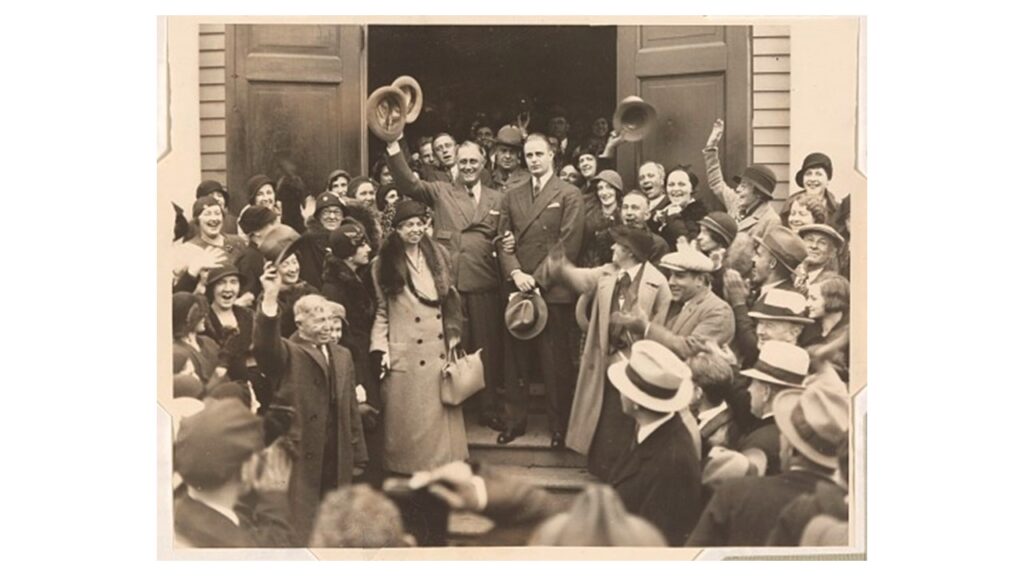
Three years after the stock market crashed, millions of Americans were out of work, and so many had lost their homes that homeless encampments and slums popped up all around the country that were nicknamed Hoovervilles, which was a reference to President Hoover’s failure to meet the challenges of the Great Depression. In 1932, Franklin Roosevelt (or FDR), the governor of New York, ran against Herbert Hoover and won in a landslide election in 1932.
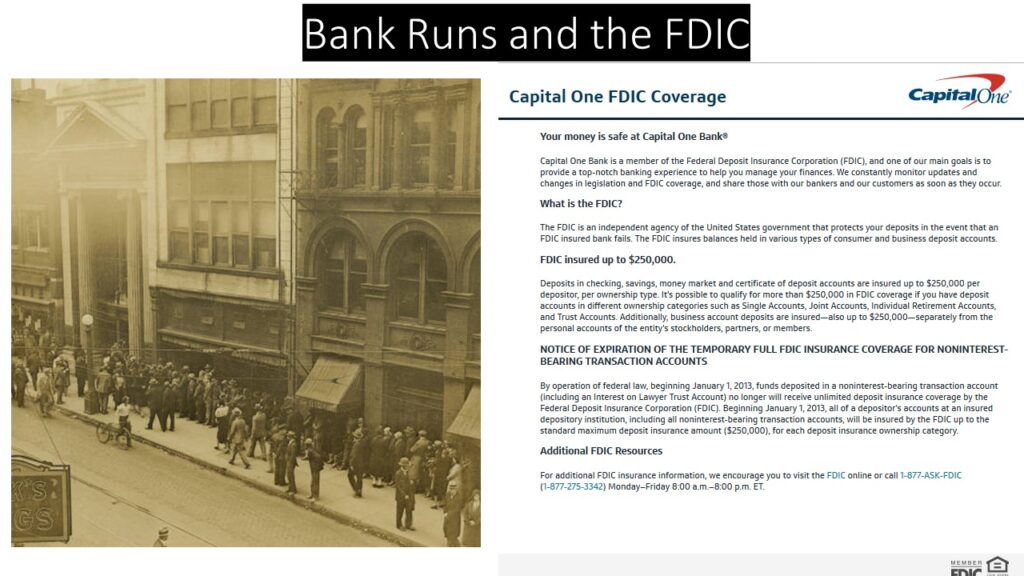
One of the first acts that the Roosevelt Administration did was to attempt to stabilize the banking system, which was on the verge of collapsing. In the early part of the Depression, there was no guarantee that if you had deposited your life savings in your neighborhood bank that you could get it out. After the economy began to fall apart, people would panic and go to the bank to withdraw their money. If too many people did this, then it could result in the bank literally running out of money and going bankrupt. During the Depression, 1/3 of banks failed and depositors lost over $1 billion of their deposits.
Immediately after FDR took office in early 1933 was he closed down the banks for several days as a way to alleviate panic while Congress and the White House pulled together legislation to stabilize the banking system.
If you’ve ever deposited something in your bank you’ve probably noticed a little logo that says something like “Member FDIC” or “Your deposit is safe and guaranteed under FDIC.” The FDIC was established to insure banks so that you would not lose your deposits.
As the FDIC and other measures to stabilize the banking system were implemented, storms in the Dust Bowl continued to get worse in 1934 and 1935. The Dust Bowl wasn’t the only place experiencing agricultural collapse – across the country, other farmers grappled with how to handle surplus crops and livestock while prices cratered, and many tenant farmers, especially black farmers in the South, didn’t own the land they were farming on and experienced economic calamity.
To respond to the problem of soil erosion and farmer poverty, FDR’s administration launched a number of programs that included everything from resettling farmers to different areas, to teaching them different agricultural practices to conserve the soil, to paying farmers not to plant crops in order to control prices.
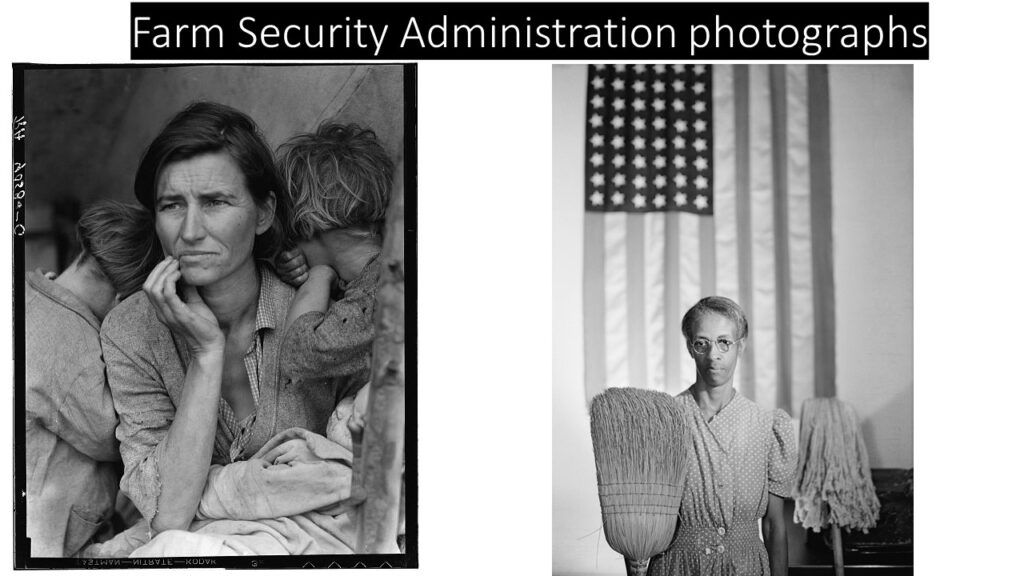
One of the agencies created to help farmers was the Farm Security Administration, and it hired many photographers – photographers who today have their work in famous museums, like Dorothea Lange, Walker Evans, and Gordon Parks – to document both the poverty in rural communities as well as the impact of the government programs.
Over time, all of these programs that FDR’s administration implemented became collectively known as the New Deal. One of the most important ones was signed into law 85 years ago yesterday, on May 6, 1935. This was a program known as the Works Progress Administration. This was a program that created government jobs for millions of Americans who were unable to find paid work during the Depression. Remember – at its peak 1 in 4 American workers were unemployed, and so the WPA literally kept many families from starving and becoming homeless by giving them jobs that paid enough for them to get by.
The WPA was an umbrella of programs that employed everyone from construction workers to help build bridges, dams, and schools to librarians who delivered books on horseback to musicians and playwrights who performed public concerts and plays.
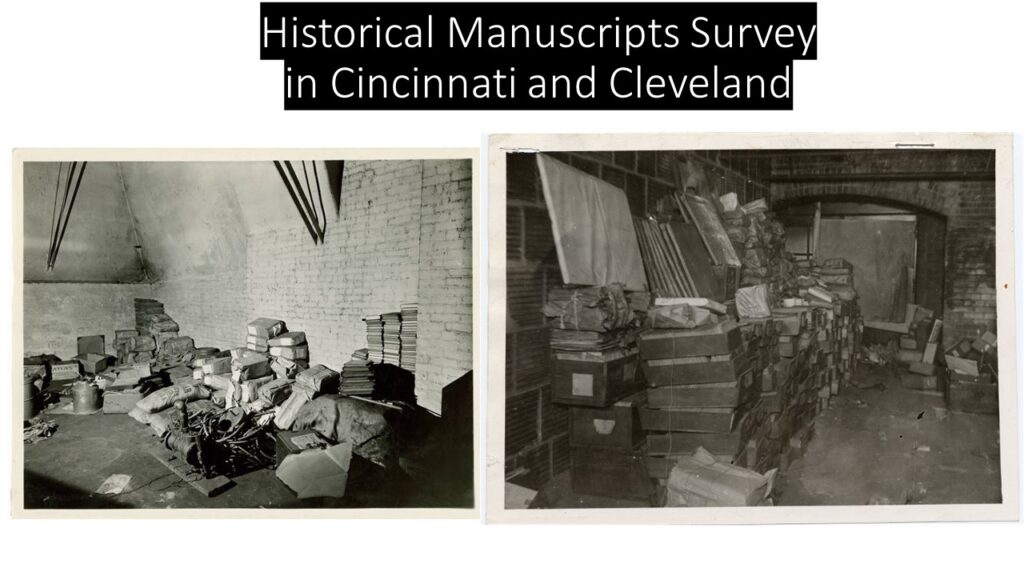
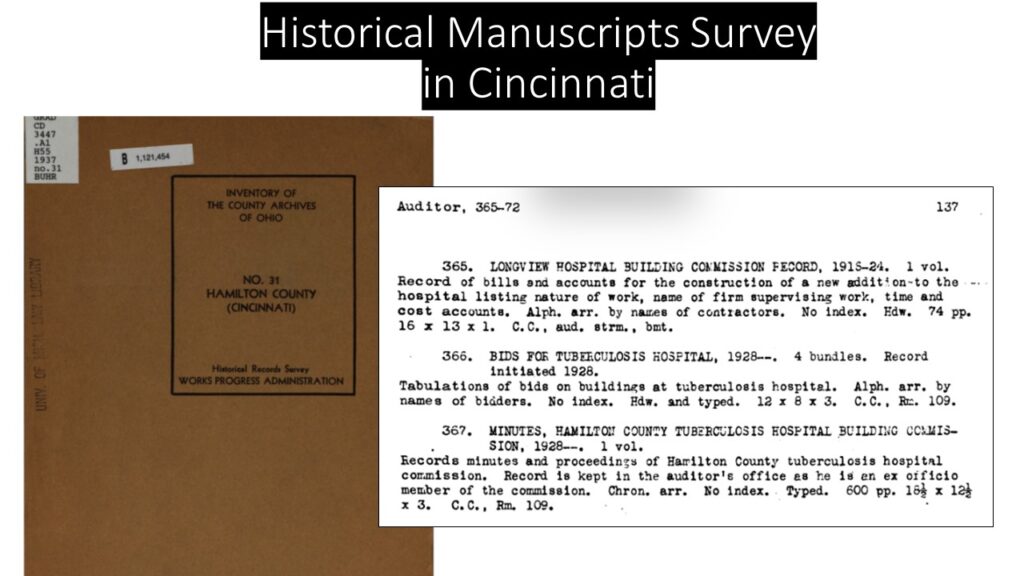
In addition to writers, the WPA also hired scores of archivists as part of a program called the Historical Records Survey. The Historical Records Survey began in 1934 as part of the Federal Writers Project. It was directed by Luther Evans, who would go on to become the Librarian of Congress and UNESCO director.
The Historical Records Survey had two major programs: a survey of federal records located in offices outside of the Washington DC area, and a survey of state and local records. The first part was important because the National Archives officially became a federal agency in 1934. The National Archives needed to identify the various federal records floating around, and this part of the Historical Records Survey helped it track down and consolidate records.
The largest achievement of the Historical Records Survey was surveying county records – of the 3,066 counties in existence at the time of the survey, fieldwork was completed for 90% of them. WPA workers carried out the field work by going to county courts and administrative agencies to determine what kinds of records existed, where they were located, and a short description of the records. The field work also generated significant information about the history of the states and their counties. In some areas, municipal records surveys were also completed, such as for the city of Cleveland. Although there had been some attempts to survey America’s local and state records before (mainly through the efforts of the American Historical Association’s Public Archives Commission), the WPA Historical Records Survey was a significant advance in trying to establish a comprehensive picture of the overall condition of America’s public records and archives scattered across the country.
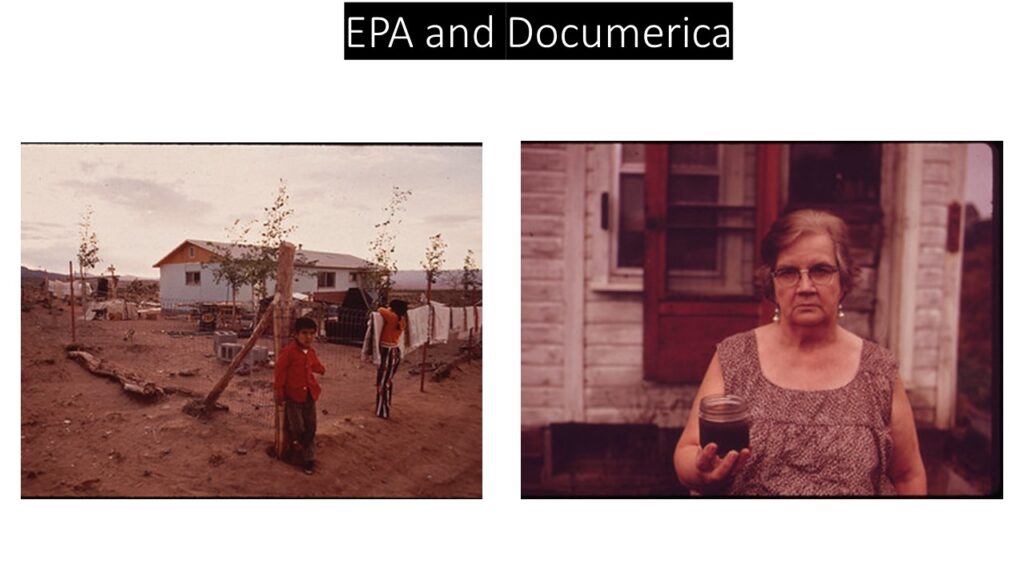
The WPA and other federal government jobs programs ended with the entry of the US into WWII. But it wasn’t the last time the federal government would pay people for documentation efforts. In 1970 the Environmental Protection Agency was established.
https://flic.kr/p/7vbo9t https://flic.kr/p/6K4sEP
A few years after it was established, the agency hired photographers to document the state of the environment in the United States. Photographs had already begun spurring new environmental awareness around the time of the EPA. These photos were intended as a visual baseline to show how the American environment looked before the implementation of laws like the Clean Water Act and the Clean Air Act. Documerica photographers, like the Farm Security Administration photographers, were given a wide range to photograph people in relationship to the environment.
Having a handle on the way records and documentation were integral parts of addressing both environmental calamity and deep inequality is critically important because it helps us understand the role that archivists and other allied professions like librarians, oral historians, writers, historians, and photographers could play in the future.
The United States is almost certainly experiencing the highest unemployment rates since the Great Depression. We won’t know the full extent until the Bureau of Labor Statistics releases its numbers for April this Friday. But there are early projections suggesting that the new numbers are 16%. To compare, the peak unemployment rate during the last major recession between 2008-2009 was around 10%.
One of the things that was remarkable and profound about the New Deal is that it validated that people like writers and photographers had just as much a right to make a living from their work as other occupations.
In the last few years, activists concerned with the combined problems of climate change and economic inequality have proposed a Green New Deal. At the heart of the Green New Deal is the goal of a massive scale investment to transition the United States economy and infrastructure away from its deep dependence on fossil fuels to renewable energy, involving every sector for agriculture to transportation. Right now the Green New Deal is more a set of ideas than a political program. Partially this is because to replicate programs at the level that FDR implemented, we need to have a President and Congress that is fully on-board with these measures, and the political establishment over the last 40 years has been a retaliation against New Deal political philosophy that envisions a government that actively works to level the playing field between rich and poor.
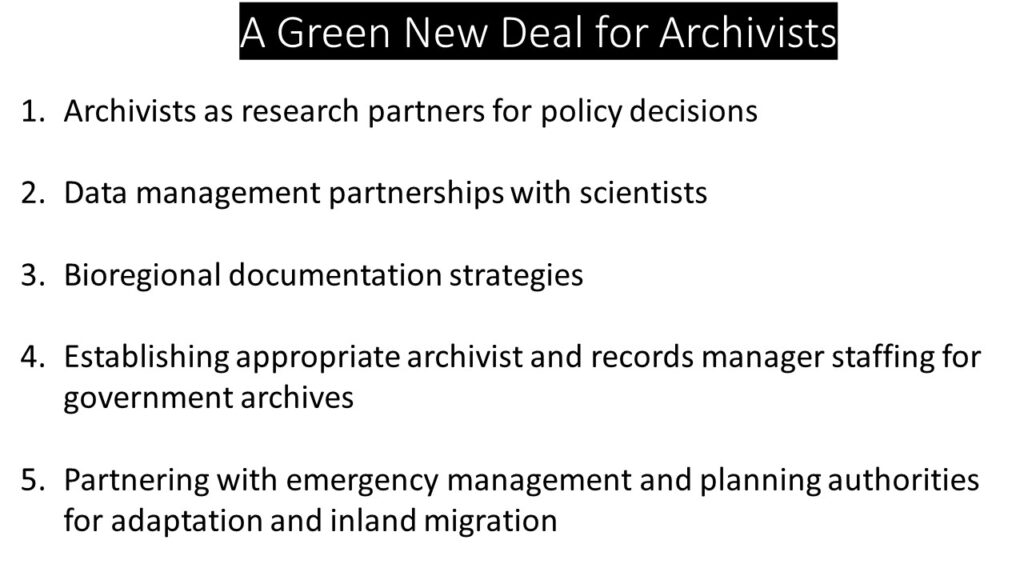
Right now, most proposals for a Green New Deal are arguably narrowly focused around infrastructure, agriculture, energy generation, and transportation. There isn’t much yet that envisions a renewal of something like the Federal Writers Project or the Historical Records Survey. So let’s consider what a blueprint for a Green New Deal for archivists and information workers might look like.
A GREEN NEW DEAL FOR ARCHIVISTS AND INFORMATION WORKERS
Compared to when the Historical Records Survey was carried out 80 years ago, archivists have come a long way in terms of our skill sets and knowledge. We also have many examples of archival projects that aren’t just records from federal, state, and local governments – we also have new projects like community archives. A GND for archivists and other information workers could put archivists to work doing a wide variety of projects. The following are just examples, and if you think of your own I hope you’ll suggest them as well at the end.
Archivists as research partners to guide policy decisions
Many GND plans call for funding investments in environmental justice projects. Environmental justice is the principle that many polluting industries or toxic waste sites have been disproportionately located near poor communities and communities of color. Archivists could be research partners in identifying and locating records that would help establish a priorities list in every community for environmental justice investment.
Data management partnerships for scientists
In order to preserve as much of the scientific findings that continue to unfold around climate change, it’s imperative that the underlying data are managed and preserved so that it can continue to be validated and reused well into the future. Archivists and librarians in universities have significant experience in data management planning and digital preservation. Deploying archivists and librarians trained in these skills at large levels to all research institutions would ensure that climate and environmental data are preserved for future use.
Bioregional documentation strategies
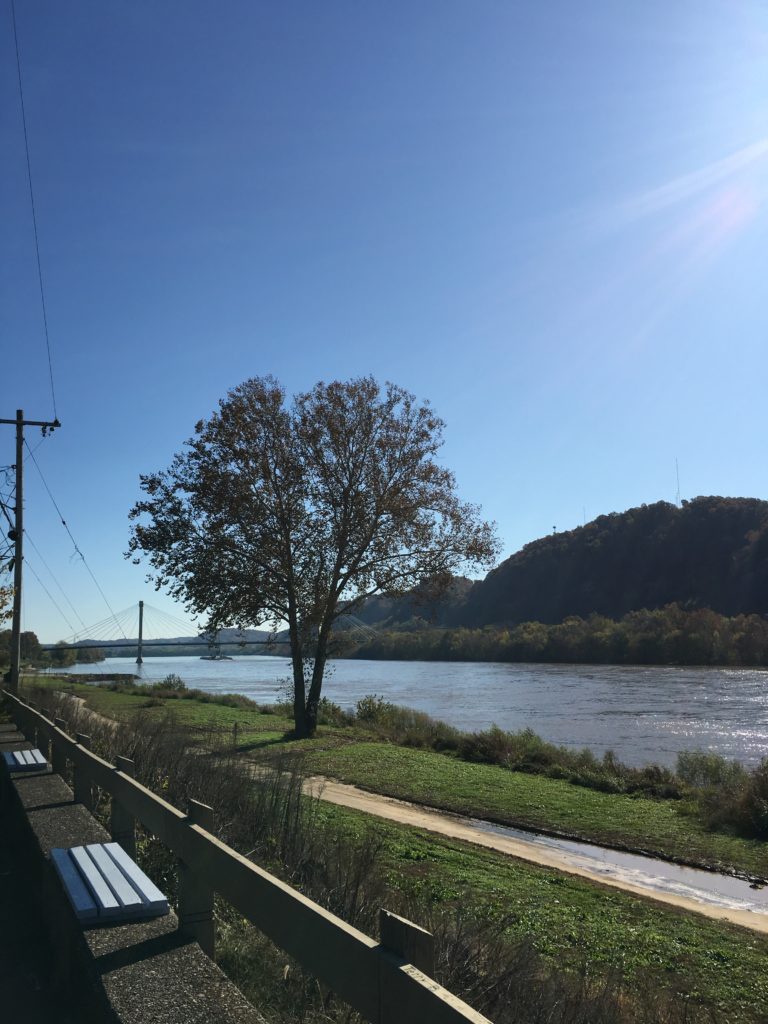
Building on the past examples of the Federal Writer’s oral history projects, and the photography of the Farm Services Administration and the EPA’s Documerica, we could employ archivists, historians, photographers, and other information and creative professionals to document the environmental state of America’s different bioregions. Bioregions are areas that are defined by environmental commonalities, like tree species or watersheds. I live in the Ohio River valley watershed, and so in this example, perhaps archivists could work to document the industry along the river, photograph different areas along it, look at archival collections in existing repositories to identify all Ohio River related archives already in existence, and so on.
The idea of doing documentation projects on a bioregional basis is because a project like this would be meant to capture the experience of everyone living adjacent to an environmental feature. The Ohio River Valley crosses multiple states, and therefore having documentation projects that conform to political boundaries would mean you could not adequately document a bioregion.
Establishing appropriate archivist and records staffing for government archives
One of the long-standing problems within the archives and records field is that government archives and records centers that hold vital records – meaning things like birth, marriage, and death certificates, veterans records, and property records – are chronically and severely understaffed. This has serious consequences as we continue to experience environmental changes. Many of these government archives have microfilmed or digitized their records, but not all of them have. As a result, if a terrible disaster like a hurricane, flood, wildfire, or tornado – many of which could become more severe as a result of climate change – were to hit the archive, it could seriously impact their ability to provide their constituents with records.
Partnering with emergency management and planning authorities for inland migration
We know that even if we act very quickly to deal with climate change, there is some degree of sea-level rise due to climate change that is inevitable at this point. A few years ago I co-authored an article examining climate change risks to archives, and we found that over 20% of archives were at risk to either storm surge from hurricanes or sea-level rise. Planning for inland migration is already far behind where it needs to be in the United States, and no one has really solved the question of what to do with a city or county’s records if that area has to ultimately be abandoned. Should its records go to the next county over? Or to the state archives? Archivists could and should be involved in planning what should happen to records from the earliest stages of planning.
We also know that many historic sites along coastlines could be permanently lost due to sea-level rise. Under a GND, one of the highest priorities would be documenting those sites through video, photography, oral histories, and other forms of documentation of places that will no longer be reachable due to sea-level rise or erosion.
Right now it’s tremendously difficult to imagine a world in which we’d not only mobilize all levels of the government to deal with climate change and poverty but to also hire archivists en masse to document it. And yet I like to think of Naomi Klein’s remarks from her book This Changes Everything: Capitalism vs the Climate where she says that our fear may paralyze us and make us want to run, but we have to give people something to run to, and that’s why I think it’s still worth talking about not just a Green New Deal, but the role that archivists and archives can play in the transition from one world to the next.
I’ve journaled every day for years. Sorry, you can’t have my pandemic journal until I’m dead.
As the pandemic began to unfold, I’ve noticed that some archivists and historians urged people to keep a journal or record some real time thoughts about the pandemic for future generations/the historical record/etc. This started weirding me out for reasons I had difficulty articulating, and I began writing this blog post almost 3 months ago to process my thoughts.1
As the story of the pandemic is shifting to the mass protests against police violence prompted by the killings of George Floyd in Minneapolis and Breonna Taylor in Louisville, I’m also seeing some similar rushes (though far fewer than with COVID-19, for important reasons I’ll share below) to document this latest round of unsettling and trauma-laden news.
Fellow archivists, it’s time for us to look at whether some of these contemporaneous collecting projects, even if they are well-intentioned, are simply the newest form of archival commodification.
SOME BACKGROUND
As the COVID-19 pandemic unfolded, many institutional archives publicly encouraged their community members to collect their own documentation (photos, social media posts, diaries, recordings, etc) about how they were experiencing the pandemic and share it with the archives. There are so many of these projects that there is now an 11-page document listing them.2
A “send us documentation of how you’re experiencing this moment!” project allows archivists to maintain some semblance of normality and relevance (“our work still matters even when the world is falling apart! Look how little documentation survived from the 1918 pandemic!”). But I also think that this stance betrays a certain form of vocational awe (please read Fobazi Ettarh’s work on this if you aren’t familiar with the concept). From those I’ve spoken with who’ve organized COVID collecting projects, the experience seems to be varied in terms of how many submissions have been received (ranging from zero to more than anticipated).
We’re now a week into mass protests across the United States against police violence. So far there has not been quite the same public rush of archivists to document this compared with COVID-19… yet (I think things could majorly change in the next several days). I believe that the major difference is because many Black archivists including (but not limited to) Jessica Ballard, Dorothy Berry, Micha Broadnax, Aleia Brown, Jarrett Drake, Meredith Evans, Lae’l Hughes-Watkins, Bergis Jules, Jes Neal, Chaitra Powell, Holly Smith, and Stacie Williams have led the way by spending years arguing for and building frameworks around the ethics of documentation around Black-led activism and historical struggle.
Several of these efforts began after Ferguson (though it’s important to recognize that Black archivists have spent decades creating archival spaces and projects representing Black life), with projects like Documenting the Now, Archiving Police Violence, Project STAND (Student Activism Now Documented), Archives For Black Lives Philadelphia, and the Blackivists. This has been an uphill battle in a profession that is white-dominated and with a long track record of overt hostility to Black archivists. It is to the credit of their work that I think many archivists are (I hope) pausing to figure out if there is a better approach to take right now that centers documentation ethics and the real needs of Black people living in their community, than a mad rush to collect things for the sake of feeling like we need to respond right away.
And even so – there are archivists and administrators among the GLAM (Galleries, Libraries, Archives, Museums) world who haven’t gotten the message yet. Last Sunday, Jason Scott of the Internet Archive tweeted out that if anyone had protest footage, they could upload it to archive.org. Several archivists pushed back (a few examples), noting this was a really bad idea from the standpoint of protecting protesters, and highlighting the importance of following the lead of organizations like Documenting the Now and Witness.
THE DOCUMENTATION OF TRAUMA
There is something really unsettling about archivists, particularly those from institutions which don’t have a great track record of supporting their most marginalized workers or constituents, suggesting that the historical record should be a high priority while people are trying to keep their shit together and attempt to not die. Furthermore, archivists themselves aren’t somehow isolated from experiencing traumatic events that the rest of the community is experiencing.
My first visceral experience of how archivists navigate trauma they themselves have been through was my experience living and working in post-Katrina New Orleans. I moved to New Orleans in 2008, just weeks before the first mandatory evacuation after Katrina. My roommate at the time had actually been through Katrina, and she evacuated long before I did because it triggered something that I now realize was probably a form of PTSD.
The archive I worked at between 2008-2013 was not involved in any attempts to actively document the post-Katrina history of New Orleans while I was there. While some of it was related to dealing with the recovery of flooded materials, limited resources, and collection policies,given the similar stances of many archives in town at that time, I think there was a deep fatigue around the expectation of telling and re-telling Katrina stories to outsiders. It was as if the stories of trauma had become a commodity for outsiders to consume every time hurricane season rolled around or a new anniversary took place.
I remember this most clearly when SAA came to New Orleans in 2013. There was some expectation from the program committee that the local arrangements committee would put together some material telling the narrative that outsiders so badly wanted to believe of “Devastation to Revival.” Of course, anyone who knows New Orleans’ history and recent past knows that this is not a clean or easy story because New Orleans is not a city that fits well into any US historical narratives. I have very vivid memories of local arrangements committee meetings in which archivists who had been through Katrina felt deep resentment at the idea that their stories and the collective experience of New Orleans was material for consumption by other archivists there for an annual conference, and that many of them no longer wanted to talk about their trauma, because at that point it had become something for outsiders rather than something for themselves.
Of course, we all experience trauma differently, and I don’t mean to represent this example as universal for all archivists working in New Orleans during Katrina and its aftermath, or even indicative of how a similar situation would unfold today. But if so many archivists felt this way about sharing their trauma with other archivists, then why the hell would we expect non-archivists to be quick to share their trauma with archivists?
I sometimes encounter archivists who seem to have this cultural expectation that we are entitled to people’s trauma in the service of constructing a comprehensive historical record, despite the fact that few of us have any meaningful training in trauma-informed practice. This is incredibly fucked up, and it is an impulse we really need to re-examine. Not everyone processes trauma the same way, and where one person may find a great sense of relief in sharing their stories, another person may find that their trauma is reactivated. For years, archivists have argued that because of our resource restrictions, we cannot accept every donation of archival material or schedule every group of records to be transferred to the archives. Why then, do we increasingly feel the need to go out and document every traumatic event that comes along?
Archivists have an ethical obligation to understand that respecting people’s privacy and right to forget their own past means accepting that we will lose parts of the historical record that others may wish we had gone to great lengths to get. When I first met my husband I would occasionally needle him about trying to get stories out of his elderly grandmother who fled Europe as antisemitism swept through it. To his credit, he refused to do so because he knew her way better than me. She passed away over a year ago, and while we never heard stories directly from her, we have since heard some stories passed down from his mother. It has been a lesson in trusting that unrecorded history will sometimes still be there even if you think you’ve lost your chances at recovering it.
Turning back to contemporaneous collecting projects: Consider that those who will be suffering the most from the pandemic or police brutality, or have the greatest frontline views to current events (such as healthcare workers or organizers) will have the least time, energy, and ability to create a full documentary record of what’s going on as it unfolds. Will the contemporaneous collecting projects of white-dominated institutions simply acquire the materials of well-off people who remain on the literal or metaphorical sidelines? What does it actually mean to document a pandemic if you’re not documenting the reality, an unfurling horror show of death that has disproportionately affected the elderly, prisoners, poor people, and people of color? How do you archive a phenomenon when the people it affects the most are the least likely to be in the archive in the first place? Do we have the contacts in the most impacted communities to actually acquire documentation showing the true human costs of these collective experiences of trauma? If the answer is “we’ll do oral histories when things calm down,” consider too that people who lost the most or were on the frontlines may be extremely vulnerable to retraumatization if we attempt to document this pandemic without training in trauma-informed interviewing and oral history skills.
And if you’re documenting protest activities that could include depictions of property damage or bodily violence……. what is the plan for when law enforcement tries to subpoena your material for investigations? This is not hypothetical. If you don’t have a plan for how to protect the people whose documentation you are collecting, then you should never collect it in the first place.
THE MANUSCRIPTS TRADITION VS THE PUBLIC RECORDS TRADITION
Here’s where I want to lodge a major critique that I haven’t seen raised against contemporaneous collecting activities by archivists who work within white-dominated long-established GLAM institutions: many of these projects function as a renewal of the historical manuscripts tradition. These projects make us feel like we’re doing something relevant and signal that we care about what our community is experiencing. It’s meant as a bulwark against our own anxiety about the ephemerality of records created in social media and on cell phones. These projects provide our administrators with feel good press releases so they can somehow show that we’re responding to societal concerns, but without actually requiring any accountability or significant resource allocation on the part of the institution itself.3
Many of these projects run the risk of giving us a false sense of relevance. Because one of the most overlooked but important things that archivists working in hegemonic institutions can do is to ensure the acquisition, preservation, and accessibility of the very records that hold that institution accountable to its constituents. One of the most profound reference experiences I’ve had in the last few years was when student activists were trying to confirm a rumor they’d heard about a past university president’s stated commitment to increasing resources for a previous generation of Black students. They were able to integrate that information they found in the university’s archives into the new set of demands they were issuing, recognizing that this was not the first time our institution had failed to meet their needs, and with the documentation to back up their argument.
I think what we have is the re-emergence of a newset of battle lines within archival discourse between the historical manuscripts tradition (i.e., collecting external materials that are then brought in and housed at the institution) versus the public records tradition (i.e., ensuring that the records of the institution itself are preserved). I think that much of the social justice discourse within the US archives profession has found its comfortable home within a framework of collecting external materials as a counterbalance against institutional narratives. But the problem is that we’ve neglected to stay engaged with the vast social justice implications of institutional records that are not well-managed.
Working with institutional records can be profoundly challenging work, because it means trying to get the records that cast institutions themselves in a bad light. No one has ever courted a donor on the premise of “We need to fund the university archivist because last year she helped a journalist research how the Board in 1995 knew all about the Famous Public Intellectual who quietly resigned and now is the subject of the latest Me Too scandal.” It means constantly feeling frustrated with many of the top figures of your institution who may be reluctant or resistant to transfer records to the archives, in case those persistent student activists come by to do some research. And as a result, many institutions end up with archival silences that can be traced back directly to the difficulty of getting the records that would hold our own institution accountable. But if institutional archivists don’t do this – who else will do that work?
ARCHIVAL ETHICS > MAKING ADMINISTRATORS LOOK GOOD
Archivists at long-established historically white GLAM institutions: if you’re feeling compelled to rush in and document things, ask yourself why you’re doing it. Are you fully prepared to follow all of the best practices for documenting in times of crisis? Is there a community archive independent of your institution that is better positioned to document what’s happening because they are led by and have the trust of marginalized communities? If this is a rush to document high-visibility activism in the form of public protests, and all you can think of is grabbing a bunch of videos off YouTube or Twitter or putting out a press release instead of building relationships with organizers first, maybe sit with why you feel that way. And why you haven’t built those relationships in the last few years.
If you are being pressured from your administrators to document things as they unfold and you don’t have the resources, staffing, or ability to adhere to ethical guidelines to do so, resist these unrealistic expectations until your administrators provide you with the resources to do your job.
Finally – one of the biggest elephants in the room right now is that budgets are being slashed at virtually every GLAM institution. There are already lists tracking archivist layoffs, librarian layoffs, and museum staff layoffs. Most GLAM institutions, particularly those dependent on public money or smaller institutions, did not fully recover from the 2008-2009 recession. Even archivists I know at well-resourced, fancy pants institutions with far more staff than my own, regularly tell me how overworked and overwhelmed they’ve been for years. This is particularly true of those dealing with the less sexy work of institutional records that are so critical to the process of institutional accountability.
If we felt this way in the Before Times, then I’m going to go out on a limb and say the best thing archivists can organize right now is not whatever handful of donated diaries we can coax out of the people who read our institution’s blog. The most important organizing right now is to organize the hell out of our institutions and profession to demand a world with far fewer billionaires, athletics coaches, six-figure salaried university administrators, cops, CEOs, and galas to make big donors feel good about themselves, and actually hire more permanent and well-compensated archivists to do the work we need for the future we deserve.
Last month 52 archivists submitted a petition to add a third candidate for Vice President/President-Elect to the Society of American Archivists spring election ballot. It’s unclear if this has ever taken place before, but if it has, it certainly hasn’t in the last 30 years. I found out about the petition shortly before I walked to a neighborhood restaurant to eat dinner, and I walked down the street with such fury and live wire anger about what I just learned that it felt like I had jet fuel coursing through me. Over the course of the next couple days, as I revisited the petition, I kept seeing names of mentors and friends I hadn’t seen the first or second time, and soon I felt heartbroken.
I think I had more contact with more far-flung archivists in the couple days following the petition than I’ve ever had outside of a conference setting. All I could think over and over was, “52 of my colleagues – many of whom are highly networked, highly visible, mostly securely employed and some even retired, mostly white, and mostly older – indicated they don’t trust the current Nominating Committee.” I’m friends with the current Nominating Committee chair and have worked with her a lot on planning STAND forums. I’ve also been on Nominating Committee myself, having been elected in 2014 and having a front row seat to trying to build a good slate. So this petition landed very close.
But more than that, this was a slap in the face to the newer generation of SAA leadership, and a major turning point in an already escalating pattern of disconcerting decisions within SAA. My friends’ immediate reactions were to post smart things things or start fundraisers. The nominatedcandidates and NomCom shared their reactions. We ended up with yet another cringey hashtag. I wrestled with nights of bad sleep and rage-crying and shitposting so much on Facebook that at least a couple of my friends said “you seem reallyupset.” I did my best to check in frequently with others who I suspected felt similarly.
And then I began reaching out directly to some of the petitioners, women who throughout my career had shown me care and mentoring, to ask them what in the world they were thinking.
ON FEELING BETRAYED BY YOUR ELDERS
Last year I attended a week-long workshop on climate grief. Much of the workshop is based on the work of Joanna Macy, and it was pretty woo-woo in a way that I secretly love. One of the rituals we did was a grief circle. During my turn in the grief circle, I talked about a painful feeling I’ve grappled with for a long time, which is the acute sense that my elders have betrayed my generation. That after the environmental gains of the 1970s, the adults of the 1980s and 1990s and 2000s failed to collectively organize in order to protect my generation’s ability to enjoy clean air, clean water, and the diversity of animal and plant species around us, even though everyone knew about the dangers the year I was born, when James Hansen presented testimony to Congress on global warming in 1985.
The same week I was doing my climate grief ritual was also the same week of one of the more remarkable events of the early Trump presidency. A woman with a baby on her hip confronted Scott Pruitt at a restaurant about his destruction of the environment. I’m sure there were people around that woman who felt embarrassed by her witness, who thought that she was using her baby as a prop, who thought above all it was a display of incivility.
Scott Pruitt resigned a couple days later. Maybe he knew the mounting lawsuits were getting to him. Maybe he thought that being a grifter wasn’t all that he thought it would be. Who knows. But the symbolism of this young woman and this young child – two people who will inherit the earthly legacy of Pruitt and all of his cronies who make the world unlivable because it enriches them – was undeniable.
It is not easy to talk about feeling betrayed by your elders. The first problem is defining who our elders are. “Elders” is a squishy definitional category, and it is always contextual based on relationship. While many cultures have concepts of elder identity that are decoupled from linear time, I’m going to work with the more mainstream idea of defining elder status as a function of age. Elders are only elders in relationship to those younger around them. If a society solely existed of a single generation, would we still have the concept of elders?
The second problem is that similar to other generational cohorts, power and capital and visibility is not evenly distributed among our elders, and intragenerational records of hostility or support for social justice often reflects that (for example, older white men often have a legacy of making life a living hell for other people in their generational cohort, older women of color often have a legacy of pushing for the most meaningful changes in social justice).
But the biggest problem of talking about feeling betrayed by your elders is that doing so publicly invites phenomenal levels of defensiveness from people older than me. Whenever I have attempted to do so, I am met with the generational equivalent of “not all men!” What’s most bewildering is that this reaction is often strongest from older men and women I have been close with and really look up to, and so I’ve all but given up trying to talk about generational justice in public.
Ultimately, the politics of addressing climate change are shaped more strongly by the forces of capitalism and international relations. Clearly, millions of people of all generations are profiting from climate change, or are trying to mitigate the worst of climate change, and will be impacted by climate change.
But climate change is also unique compared to other issues of social justice in that it has a clear time-based “point of no return” for ecological systems that makes the stakes of generational (ir)responsibility particularly stark. And that’s where my sense of betrayal kicks in. It’s been clear for decades that the best time to do something was 30 years ago. The next best time is now. And if we don’t do something in the immediate future to decarbonize, the future will be very unpredictable for future generations. Both 30 years ago and now, older generations than mine had the most capacity to do something at the most opportune time to slow down climate change. Their abject failure to do so has created a much more difficult and frankly existential problem for my generation and future ones to live with. And the older generation will likely leave the Earth before they have to suffer the worst effects of it.
I often hear from my elders that my generation does not respect what they sacrificed, does not understand they faced similar challenges of political resistance, and do not appreciate the gains they made for us. (For the rest of this essay, please assume that when I talk about “my elders” I mean the mirrors of people who share my demographics: white and middle class.) This is defensiveness talking, and it’s completely deflated when you actually spend more than 5 minutes looking at leftist millennial culture. Bernie Sanders is the oldest man running for president, but he has such strong support among young peoplebecause he speaks directly to our concerns. Almost no one in my generation remembers Jane Fonda from her Vietnam War era activism or exercise videos or marriage to Ted Turner, but they love seeing her arrestedbecause she speaks directly to our concerns. Young activists have revived the memories of people like Marsha P. Johnsonbecause their legacy speaks to our concerns. The song “Solidarity Forever” which was written decades ago is seeing an unprecedented revival at socialist gatherings because it speaks directly to our concerns.
For a long time, my feeling of generational betrayal was mostly quarantined to the issue of climate change. But seeing that SAA election petition and the age distribution of those on it made me feel that the generational betrayal was trickling outwards, from climate change into my profession. Because as long as I’ve been in the profession, we have had warnings that there was a short window in which we could at least attempt to prioritize the needs of the younger generation and speak directly to their concerns and make a healthier world for all of us, or we could keep doing the same things that got us to this tenuous place.
THE LAST DECADE
Ten years ago I attended my first annual meeting of the Society of American Archivists. It was 2010, and it was in Washington DC. I don’t remember if I had any conference funding but I definitely remember staying in a youth hostel in Washington DC because I definitely could not afford a hotel. I was making around $20,000 a year.
A few months after that conference were two pivotal milestones in the discourse around the work and professional identity of archivists. Rebecca Goldman, an archivist known for making webcomics about archives, created her post-SAA Howl post that spoke to the concerns of many of the younger and more precariously-employed folks at the conference that year. And then Maureen Callahan launched the You Ought To Be Ashamed collectively-authored blog (with the URL “Eating Our Young”) to discuss and shame shitty archivist job advertisements. Rebecca Goldman led the efforts to organize the Students and New Archives Professionals roundtable (which later became a section). For those of you who missed this the first time around, it’s worth going through and reading the posts because it’s pretty stunning how much archival labor precarity was being discussed years ago, and how clueless the leadership of SAA was. Although it’s rarely referenced in the blog posts, the larger cultural context at the time included Occupy Wall Street, which no doubt was influencing some of our perspectives.
After SNAP was established in early 2012, another major turning point was controversy over the use of volunteers in archives. At the 2013 conference in New Orleans, then-President Jackie Dooley addressing the issue of archivist precarity in her plenary address (pdf version). The address, titled “Feeding Our Young,” provoked some strongreactions, and by this time, archivist twitter was a lot more of a vocal force than it was in 2010. As a result there were some strong real-time backchannel responses. Following Jackie’s plenary, Council took up the issue of internship practices. Several years later SAA made the decision to only post paid internship advertisements.
By this time, it was starting to become clear that the response of SAA’s leadership to the crisis of well-compensated archival labor was wholly organized around individual responses – after all, guidelines and best practices are voluntary and not enforceable. One thought experiment I like to occasionally entertain is whether if archival leaders had followed through with some of the fleeting discussions in the 1970s about unionization or the 1980s about institutional accreditation, SAA theoretically would have the foundation to issue some kind of sanctions – even if only symbolically – against institutions. It’s great if you mentor students and new professionals or donate to scholarship funds, but it’s not on par with systematic and collective changes that help everyone – especially archivists who may not fit the mold of a potential mentee.
In response to a 2014 notice from SAA leadership that they were definitely still talking about employment, I suggested that SAA should immediately implement a comprehensive regular salary survey, investigate salary improvement mechanisms tried by other similar associations, and explore accreditation standards as a way of improving employment for archivists. A year later, I did some quick math following the annual business meeting about a proposed dues change and then got 52 people (a far more diverse and young group than the more infamous and recent group of 52) to sign on to a letter calling for SAA to make the dues structure truly progressive. SAA didn’t create a truly progressive dues structure, though they did implement a new higher-income dues category.
This is just scratching the surface of what was happening with SAA governance in the 2010s. In addition to the question of employment, internships, volunteers, and salaries, another issue during the 2010s was the shutting down of “that darn list” aka the A&A listserv. Incidents of transphobia and intimidation by right-wing media happened in connection with our annual meeting. At two annual meetings in a row I was subjected to harassment by two different male members of the profession (one incident I reported in accordance with the code of conduct, one I did not. I was happy with the way the reported incident was handled with care and attention by SAA staff).
WAKE UP CALL PART INFINITY
My faith teaches me that listening is an integral part of conflict resolution. My politics teaches me that power is rarely shared or relinquished without protracted struggle. Both my faith and my politics teach me the importance of telling the truth.
The truth is that the Society of American Archivists is failing to meet the needs of younger and more precarious and marginalized archivists – and much of this failure is institutionalized by our reliance on managerialism and business leadership thinking, our obsequiousness to “experience,” and an association budget model that relies on stable salaries and institutional funding which fewer and fewer archivists have. Perhaps this massive failure of care was easier to ignore in the past (though I tried to warn y’all back in 2014) but it’s no longer tenable to keep doing so if the association is going to survive. To paraphrase a sentiment on a recent conference call: “SAA can afford to lose people close to retirement. It cannot afford to lose people just beginning their careers.”
The day after the petition came out, I sent off this email to Council:
Hello colleagues:
I am writing to express my increasing alarm at a series of events that have recently taken place within SAA’s elected leadership. This concern involves what the organization is doing to prioritize the needs and leadership of early-career, precarious (underpaid and/or temporary), and/or underrepresented archivists. I believe that the significant declines in membership levels under $50k can partially be explained by an association that is failing to meet the needs of these groups. I am writing this from the perspective of someone who has been active in the organization for over a decade. Among my SAA roles, I have served as a student chapter president, a member of the Communications Task Force, member of the Nominating Committee, chair of the Records Management Section, and current member of the Committee on Public Policy.
SAA has been an instrumental part of my professional development, and it is vitally important to me that it continues to be a healthy professional association so that other archivists may benefit from it in the way that I have. I am very worried that if SAA does not prioritize the needs of archivists who are early-career, experiencing precarity, or underrepresented, it is at risk of sowing the seeds of its own demise and irrelevancy.
I am organizing some of my concerns for public sharing via my website (which I have done previously before on SAA dues structures and the Frank Boles preprint). Before I put out anything out, I want to get as many of your perspectives as possible on the questions below. I am deeply aware of how difficult and thankless professional association work is, and this is why I wanted to reach out to you first.
Please forgive the length of this email. If it’s easier for you to share your thoughts via phone I am more than willing to set up a call. I am currently out of the office this month on sabbatical, but despite any auto-reply you might receive, know that I am still checking my email.
Dues structure
With the membership report that “Calendar year 2019 has seen the largest decline in membership in SAA’s history” it is worth noting that the majority of the loss in membership is in membership bands below $59k – a loss of 261 members. There has been only an increase of 50 members in upper bands (more than $60k salary), so a transfer of lower-income members to higher-income member levels cannot account for more than perhaps a handful of losses in the lower bands. In other words it seems that these lower band declines are “total losses.”
More than 50 of my colleagues and I raised concerns in 2015 over the dues structure. I again disagree with SAA’s claim that its dues structure is currently progressive when it in fact is regressive despite the tiered dues structure (although lower-income members pay a smaller dollar amount, they pay a higher overall percentage of take-home income as dues). I strongly object to the potential option of flattening the dues structure without an analysis of likely effects on lower-income bands. This has the potential to be an even more regressive step and depending on the price point, perhaps lead to even further losses of membership dues at the lower bands.
There is nothing unusual about tiered income-level dues membership for a professional association. Given that our membership works across various sectors for which there is no comparable professional development funding structure, let alone salary scales, it seems that retaining an income-level dues structure is the fairest way to ensure that poorer members are not subsidizing the costs of wealthier members who can and should pay more in dues.
Is Council developing an outreach plan to former members to determine why we have experienced such a drop-off in dues membership, particularly at the lower levels? If dues affordability is an issue, then this is critical information necessary for reconsidering dues.
Has SAA undertaken a comparable dues comparison to other similarly-sized professional associations? How is the information derived from the 2017 WArS salary survey being used to inform membership dues discussions? According to the salary survey (pages 15 and 16), approximately 920 respondents made a salary of $59,999 or less. 777 respondents make $60,000 or more. In other words, membership level declines are only happening around the lower half of archivist salary ranges. No further discussion of membership dues should take place unless it prioritizes the needs of archivists making less than $59k a year, especially as early career and precarious (i.e. temporary or underpaid) archivists are far more likely to be represented in this group.
Salary transparency
I strongly oppose the recent decision of SAA to defer decisive action on mandatory salary disclosures in job ad postings that so many regional and specialized archival associations have already taken. An incentive does not send as strong of a signal as a complete ban on ads without salary disclosures. Why is SAA deferring to the preferences of employers, who often wish to obscure their salaries? SAA has few enforcement mechanisms for standards across the profession, but it has failed to seize this opportunity to make a meaningful action by being the largest association to back salary disclosure requirements.
I would like to know why SAA’s leadership did not choose to make salary disclosure mandatory, and why it has effectively chosen to side with the only group that benefits from salary obscurity – management. Obscurity of salaries puts job seekers into an unfair position. If SAA is worried about the loss of income given its understandable budget concerns, then information about advertisements as a source of income should be included in these discussions.
Recent ballot changes and elections
As a former member of Nominating Committee, I know first-hand how much work the Nominating Committee puts into crafting a slate based on a list of nominations provided to NomCom and NomCom’s own professional networks. This work is monumental, considering that asking already busy individuals to dedicate a significant part of the next 1-3 years of their life to unpaid service work is not an easy task. I understand that the recent ballot change caused by the petition on behalf of Kris Kiesling is in accordance with the bylaws, and that Council does not have any formally-defined obligations concerning this situation. With this in mind, I want to register my deep concern that this petition has so many former SAA council members, presidents, and fellows as petitioners.
The fact that so many former SAA leaders signed off on such a petition has given me the impression that many of them do not trust the decision-making process of the current Nominating Committee. This is a very serious proxy signal for leaders of the profession to take, and frankly it is disappointing as no statement has been issued along with the petition about why such an unprecedented action was taken.
I will be blunt: seeing a petition of 50+ signatures primarily composed of long-time members who share close network ties with one another as well as many demographic characteristics (mostly older, mostly white, and many of whom do not have recent employment experiences of short-term project positions) only adds to my concern that SAA is sliding into a posture that is more concerned with gatekeeping than it is with expanding the scope and reach of SAA’s leadership capacity. I hope that this catalyzes a larger discussion within our elected leadership about how this is only just the latest event in a series that has made many members question whether SAA is an association they can contribute to their talents to, particularly if they do not fit the mold of previous leaders.
Finally, I have retained a concern since serving on Nominating Committee about the low turnout of the elections. I would like to request that Council investigate the possibility of whether the election service provider is capable of providing turnout data that an appropriate body (Council, the Membership Committee, or the new Committee on Research, Data, and Assessment) might use to inform the membership of anonymized voting trends, akin to exit polls used in civic elections. For example, what would the cast ballot distribution look like across membership dues levels? This data may help inform where to target “voter outreach efforts” to achieve higher turnout in future elections. An example may be finding that student members rarely cast ballots – in which case, a voter outreach effort might be undertaken to SAA student chapters and SNAP.
Thank you for your service, and for your patience in reading this long email. I look forward to hearing your thoughts.
TALKING TO THE PETITIONERS
Over the course of the rest of January, I had in-depth conversations with five of the 52 petitioners. All the conversations lasted at least a half hour, some even went for close to an hour. The reasons people gave for signing the petition were wide-ranging, and the reactions of people I spoke to varied from some sense of regret to utter bafflement that anyone would be angry to complete defensiveness.
But the common thread I found across the petitioners I spoke with was that they rarely connected their signing of the petition as the latest link in a chain of events that has been highly discouraging for those of us trying to make a more inclusive and worker-friendly SAA. All of the petitioners I spoke with were completely unaware of the massive drop-off in members under $59k. Almost no one had been following the most recent developments in the salary transparency issue. And a couple didn’t even realize the extent of the Frank Boles preprint disaster, because they had consciously stepped away from SAA work for several months.
Another common theme among most of the petitioners I spoke with was many mentioned their deliberate choice to ignore social media conversations around the profession. While I am very sympathetic to unplugging from social media, and retain some of the concerns I’ve had for years about moving online conversations to interpersonal dialogue, the undeniable reality is that enormous expanses of archivist professional conversations continue to take place on twitter.
There is something a little weird and borderline anti-intellectual about refusing to acknowledge the conversations other people in your field are having, even if you aren’t an active participant (and as a personal note, this is partly why even though I’ll never join twitter again as myself, I do tweet occasionally behind the scenes for projectARCC because it’s such an easy way to reach tons of archivists). This is not to imply that one can only be aware of professional discourse if they’re visible on social media (again: logging off is a good thing), but I hope folks recognize that if you’re deliberately avoiding archivist social media discussions on a permanent basis (or don’t ask for occasional updates from those who follow the discourse), it means you’re also going to be clueless about what many archivists think about the state of the profession.
Perhaps what angers me more than the failure of my archival elders to pull their weight for the next generation was their failure to be good archivists. Archivists claim our bread and butter is context, that the records we preserve fill in the contextual background noise of society at a given time, and that one of the most important professional acts an archivist can perform is to contextualize records within the setting and function for which they were originally created.
Gerry Ham famously wrote, “Our most important and intellectually demanding task as archivists is to make an informed selection of information that will provide the future with a representative record of human experience in our time. But why must we do it so badly?” Since 1975 we figured out things like collection surveys and rethinking appraisal. But what we have not reckoned with is how we’re going to acquire a representative record of society if early career archivists are leaving the profession because of a systematic failure to advocate for their interests. This is the most important form of context we need to be talking about in the archival profession right now: without a workforce of well-compensated archivists, the archival record is endangered (open access).
It is scandalous and professional malpractice that our archival elders have not shored up the shaky foundations for new archivists to launch their careers. When even that bastion of legendary left-wing economic thought, the Federal Reserve, recognizes that student loan debt among millennials is double that of Gen X, and yet our professional association has never seriously adopted student loan debt as a professional concern (a concern that contextualizes the careers of more than half of millennials with a master’s degree), something is very deeply broken. I don’t know where SAA goes from here, but if we don’t immediately address the losses of younger, poorer, and marginalized archivists by prioritizing their needs instead of continuing to follow the road towards managerialism that Archie Motley warned us about in 1984, things are only going to get worse.
BREAD AND ROSES
I’m so tired of continuing to point out to those who have been in the profession longer than myself that dismissiveness of younger archivists’ concerns is a very real problem within the association. I’ve been trying to sound this alarm for years, and at over a decade in the profession I can’t believe I’m saying the same thing over and over for so long.
When I was going back and looking at some of these old posts, I found what I’m 99.9% sure was an anonymous comment from myself on the Howl post in 2010: “Although I know I got where I am by a large amount of hustle, hard work, and knowing the right people, I also realize that a lot of what separates me from an unpaid internship is just dumb luck. It sucks. […] I don’t know what the solution is, or if there is one, but bravo for this conversation taking place and may it continue on until the whole profession recognizes what we’re going through.”
In 2014 I said, “The archival record is only as good as the archivists charged to care for it. Archivists who are told their voices are not worth listening to because they are new will have difficulties developing into the thoughtful leaders we need. And we desperately need to grow these leaders to fight for the continued survival of our profession and our institutions.”
How often do the long-established members of our profession need to be warned about their inattention to new members needs until the profession falls apart? How many more wake up calls do we need? I’m not joking. I’m entirely fucking serious. And if you think I’m being dramatic, then I’m guessing you’ve never worried about student loan debt or working near the poverty line anytime in the last decade.
Shortly after the SNAP roundtable formed, I helped organize something called “lunch buddies” which tried to match up a lunch or dinner or coffee host with SNAP members. Despite requests for participation being sent to the SAA Leaders listserv, older and more established archivists rarely showed up in significant numbers to help out and host a lunch or breakfast outing for this newly established section of young and early career archivists.
If you aren’t even willing to host lunch with the next generation, don’t be surprised when they grow up to tell you that the individual crumbs you offered are no match for societal starvation.
I’m now about halfway through my sabbatical, having been on leave in November and January. I have mixed feelings about the alternating months nature of this sabbatical – there is a bit of intellectual whiplash in going from normal workday headspace to sabbatical headspace. On the other hand, it’s nice to carry around the sense of being able to hit a reset button every month.
I stuck close to home in November and January, and the only travel I took was in Cincinnati’s backyard. At the beginning of November I gave a presentation on fracking and recordkeeping at the (Re)covering Appalachia symposium at Shawnee State in Portsmouth. It was a small conference, but I found it really transformative in shifting my thinking of Cincinnati’s role in the region. One of the panels I attended was about media coverage of Appalachia, and while I’m used to thinking of the Washington Post or The New York Times as parachute journalism, it was jarring (in a healthy “examining my assumptions” way) to hear locals from the Portsmouth area characterize the Cincinnati Enquirer as being in a similar category. I often think of Cincinnati in relation to larger cities, it is really humbling and necessarily perspective-shifting to think of Cincinnati in relation to smaller towns in this Appalachian border region.
In mid-January I spent a few days in Athens at Ohio University’s archives on the other side of the reference desk, researching their collection of District 6 United Mine Workers of America records. One of the great pleasures – and also sources of anxiety – about being on sabbatical is the affordance of having time to fall down various rabbit holes without a sense of when you’ll climb back out. I wanted to use the UMWA records because of a totally speculative hunch I had about early union bargaining demands (as I was finishing this article, I was curious whether those early demands included documentation related to mine safety). It turns out I didn’t really find the kind of thing I was hoping to find, but everything else was pretty fascinating and filled in a lot of knowledge gaps I had around the New Deal and labor. The OU library staff are a great bunch of people, and I loved spending time with them.
I haven’t totally shaken off the productivity guilt I talked about after my first month. I feel both thankful for the space to rest my mind but especially my body – a feeling that was especially acute after a traumatic event that impacted my well-being in early November. But I also feel guilty: capitalism has so thoroughly coopted the idea of rest as being the ultimate productivity multiplier that a persistent part of me feels disappointed with myself that all of this resting hasn’t corresponded to some kind of peak productivity, that I haven’t completed both of my sabbatical proposal projects already. Rest for rest’s sake is not something I know how to translate into my final report showing how useful my sabbatical was to higher ed administrators.
But the reality is that I have “done” a lot of stuff. I took two open courses on maps and GIS. I’ve read dozens of articles and a couple of books. I’ve been writing and editing and planning and keeping up my usual levels of service work. For the first time, a publisher asked me to review an author’s book-length manuscript under contract which was incredibly rewarding (and hard!). I met with an IRB representative about one of my project proposals and while the staff member I met with was awesome, I quickly realized that my institution does not offer very good structural support for non-STEM human subject research. And then I also realized I don’t have the money, assistance, or patience to transcribe hours of interview-based phone call recordings. I read a bunch of literature and realized my original proposal would have simply replicated other work out there, and so I’m changing up that original project plan and think it will result in a much richer and more exciting and hopefully less tedious project.
I’ve also been doing a lot of work that is completely invisible and erased within the value systems of higher education. I’ve spent more time at the gym which helps me think and keeps me healthy. I’ve been doing a tremendous amount of emotional labor with the fallout around SAA’s election petition (both supporting friends who have been hurt by this and also talking to petitioners to express my severe concerns about the impact of their decision amidst other ongoing issues within the association). I took field trips to museums and lectures that aren’t obviously relevant to my work but which are planting small seeds that might germinate into something I reap years from now. Or maybe it won’t. Who knows. Not everything interesting or pleasurable or fascinating or educational has to produce a return on investment to be worth the time.